L1 vs L2

When your learner says, ” That’s Greek to me!” Is it OK to use… Greek?
There is a lot of talk going around about whether or not a teacher should use the learners’ L1 when teaching them English. I  speak two languages well. English and Greek. I also speak a bit of German. So, when I teach learners whose language I know, I do tend to use the students’ L1. Is that such a bad thing? I don’t think so. For me, from time to time (not always!), it is OK to use the L1 in class. OK, but when?

  • To highlight the difference between the L1 and L2:
    • For example, in Greek we say, ” Πάω για ψώνια  (pao gia psonia)” which if when translated, is “I go for shopping”. This is of course what my Greek learners very often say.  So, I resort to Greek and explain the differences between the Greek language and use of preposition and the equivalent English structure go + verb+ ing (go shopping). I also use the L1 to explain collocations. I highlight the different verbs and how the collocate with nouns. In fact, when teaching Grammar and vocabulary I often use the L1 to clarify terms, to show differences and avoid L1 transfer errors. I know learners are not supposed to translate from the L1 to the L2 and that I, the teacher, am supposed to instill in them the English way of thinking/saying but reality is not that simple.
  • To focus on/teach an English word:
    • When I am teaching young learners, I often sing to them and very frequently I sing a well known Greek song but add English words! The English words are translations of the Greek lyrics. My learners always remember the English words that accompany a Greek  tune!
  • I use the L1 out of my own insecurity just to check (clarification/ comprehension or concept checking) that we are on the same page:
    • What can I say here? I know this is wrong, but I still do it. I ask my concept checking questions, I do an example in class but there is always a part of me, a little devil that pushes me to say something in Greek. Just a little check to make sure that everyone is on board! I want to be 100% sure, especially with my younger learners.

      Being on the fence about L1/L2 usage

  • I use it when I am giving feedback on writing (especially with weaker students):
    • Sometimes some of the things my learners write in their essays do not make sense and then I ask them in Greek, ” Do you mean ……….?” They tell me what they want to say. they give me their English version and then I guide them towards the correct version of what they wanted to say.
  • To avoid frustration:
    • there are times when my students are just simply tired of trying over and over to say something in English, so they just blurt out the Greek word. I then offer the English equivalent and they just repeat what I said. I try to discourage this, but at times, I do let my students get away with it. In Greece very often students come to class after a full day of school. Therefore, my learners are often extremely tired and frustrated and when it is 10 o’clock at night, they may resort to their L1.
    • I use my (bad) German with my German students to show my students that I too have difficulty learning a foreign language:
      • I often use German with my German learners because I want them to understand that I know where they are coming from. I understand. I know that learning another language is hard. When using my lower level German I show them that it is OK to make mistakes and that they should be willing to take risks. Another bonus? My students feel like teachers cause there is a reverse in roles. They teach me some language as well. They become my teacher and they love it : D
    Learning a language is not something black and white. I am here to help my students learn and sometimes using the L1 simply does that. It helps them. Should the L1 dominate the class? Of course not, but it can facilitate learning, don’t you think?


    Till next time…….

    Teaching …

    Teaching is like …….. acting
    have you ever thought of how many professions overlap? When teaching, do you ever feel like you are an actor/actress? Of course my title is not a sweep statement nor do I believe that teaching is exactly or simply like acting, but in this blog post you will find a few reasons why I believe being a teacher is like being an actor/actress minus the Oscar nomination. So, here goes….

    • No matter what is going on in your personal life, you got to put on a smile:
      • You can’t dwell on any hardships you are facing on a personal level, you have to teach, and teach well cause otherwise your students will not learn, enjoy themselves, be happy with your teaching.
    • Your classroom is your stage:
      • When you need to be the center of attention, you need to grab your learners’ attention. Your classroom is your stage. If your teaching, like acting, is boring, you have lost your audience; your learners (I am not saying that teachers should be the ones talking all the time and learners should just listen. Just saying that when teachers talk, they got to be interesting).
    • You need to sing and maybe even dance:
      • Isn’t singing and dancing part of your teaching especially when teaching young learners? Don’t you teach your students songs that will help them learn the alphabet, the vowel sounds, the colors? Aren’t you the one who shows them the moves to heads, shoulders knees and toes? That is some serious dancing and singing (you tap into the Fred Astaire you never knew you had in you, fellow teacher).
    • You use props:
      • You use everyday items and they are part of your setting (also see the stage bullet). These items help you get your message accross, make your lesson more lively. They are like special effects in movies. The only difference is that they make a ‘special impact’ on the learning process.
    • You add drama, laughter, surprise to your sessions:
      • In order to make your lesson more exciting you may resort to making jokes, being dramatic or adding a surprise element to your sessions. Aren’t all good actors/ actresses versatile? As teachers, we are not one trick ponies. We add a variety of elements to keep our learners engaged.
    • You cannot ‘perform’ well if you do not plan:
      • You need to know what you are going to teach before you go into class. You may even rehearse some of the things you will do to make sure everything goes according to plan. If you are a new teacher or teaching something new, you may even resort to learning things by heart!
    • You role play or… help them rehearse for plays:
      • In order for your learners to learn very often you get them to do role playing activities. This makes the target language often easier to learn. Then there is the end of the year event which very often is a play! You, of course, are responsible for costumes, rehearsal of plays etc.
    • You make your learners think, you broaden their horizons (self explanatory).
    • You get letters. messages, flowers, gifts….:
      •  You get lovely little cards from your students. You may even get a small gift or flowers as a way of showing that they enjoy your teaching.
    • Paralinguistic features matter:
      • You use your facial expressions, your body, your gestures to convey meaning, to get the message accross just like an actor or actress does.
    Of course, you will not get an Oscar nor will you make big bucks, but then again who cares? You affect people’s lives and you equip your students with something exceptional: you help them communicate their thoughts!
    Picture taken from here
    Till next time….

    EAP writing

              Going from being a teacher, to being a learner

    Isn’t interesting how, sometimes you teach something, and then when you actually do what you are teaching, you see how hard it is? Well, that is what happened to me. I went from a teacher to a learner. I tried to go from what I teach, to actual practice, and this, my friend, was a tough cookie. But what am I talking about? OK, let’s take things from the beginning.
    Academic Writing. I teach it. I teach how to do research, how to use the research, paraphrase, summarise, make your voice stand out.I talk about having arguments and supporting them, but today while I was working on my Delta module 3 assignment*, I realised that this is really hard! So, let’s see some typical learner problems, what I tell my learners and what I actually think.

    Academic Writing: Learner (and my) problems

    • Finding/ Choosing the right sources
    I often tell my learners that they will/ should find a lot of sources to support what they want to say and that it is important to make their views stronger and valid by supporting them with research. I then go on to say, “When you do not have enough sources. Go to the library. Search more. Search, search, search. Be critical. Read what your sources say carefully. Make notes. If there is not enough research, synthesise information from various sources”. 
    What I really think: 
    1. There is so much research out there and understanding what and how to use something is extremely hard. Searching online or in a library is time consuming. Not being able to access freely what you want is frustrating. This may lead your critical thinking down the drain and you may end up using what you found even though you now it is not always the best. It is like using a source just to use a source.
    2.  There may not be enough research on what you want to argue because researchers focus on other things or because what you are writing about is fairly new or so on. In this case, you cannot support your views with a source, making your argument weaker than you want.
    True story: Today, I wanted to write about some of the challenges NNS EAP students have when giving oral presentations and could not find sources mentioning anything about body language or intonation patterns. In fact, I could not support half of the things, I know as a teacher, are challenging for international students who have to give a presentation.
    I often tell my learners that if there is not research out there that must mean something. But what does it mean in my case? Are these not implications or is it that someone has not written about them?
    • Your first draft should not be your first draft
    Or should I say, “always redraft before you give me your first draft.” Often when I teach EAP, I ask to see a student’s first draft. I always tell my students, “Please make sure that you have read, re-read everything before you give me your first draft. The better your first draft is, the better feedback I will give you”.
    What I really think: Spot on! My first draft was rubbish. I redrafted so many times before handing in my so called first draft. 
    • Plan
    I always tell my students, ”it is important to plan, make notes of what you will include in each section. This helps the flow of your ideas. It makes your writing more coherent and concise”. Yes, it is time consuming and requires a lot of thought and coining of ideas BUT the end product is much better than just sitting on your chair and writing.
    What I really think: Planning does require time and when you have been reading, reading, reading, the time constraints are really tight, it is much easier to start writing cause in your mind, you think you have your essay all mapped out. Unfortunately, the time you saved planning, is spent on redrafting, so I am adamant about the planning stage. It should be as meticulous as possible actually.
    • Word count
    I tell my learners, ”there is always a word count and you need to stick to it. It is important to be able to say what you want to say with fewer words and that is why you need to write and rewrite. Paraphrase and summarise.”
    What I really think: Being able to summarise, paraphrase and be in the word limit requires a lot of training. It is not easy. Word count is something I always struggle with, I like to ramble and I am a chatter box (my blog is called myeltrambles for a reason). If I struggle, what do I think my students do? I need to see how I stick to the word count, and try to transfer the strategies I employ to my learners.
    • Citing/Referencing correctly from the beginning
    As the reference system I teach is the Harvard referencing system, one of the first things I show my learners is how to cite and compile a reference list. I do this during the first lessons. I do not just teach them how to paraphrase but I also focus on citations. I tell my learners, “if you leave the referencing and citations for the end, then it will be very time consuming (and boring). To make matters worse, you may even plagiarise and forget to cite a source (the word plagiarism always alerts them).Knowing when to use italics or ‘  should be something you do correctly from your first draft.”
    What I really think: Get it over and done with. As a writer of an academic text, you need to find out what the referencing system is and use it from the first line. Also start making the reference list when you first use the source in your paper. it saves you the turmoil of compiling a reference list at the end ( I do not like that. It takes so much time!).
    • Tutorials/ Ask questions about your writing
    First drafts are often followed up by tutorials. Students get a chance to ask questions about their first draft based on the worries / questions they have or their tutor’s comments. I always tell my students to write these questions down, have a plan and ask, ask, ask. Some do. Others don’t.
    What I really think: Asking questions is necessary. Yes, I think I do know what I am writing about but I still need help. There are things I am already on the fence about, which is why I already have 5 questions about some of the things I wrote in my Delta assignment. I have already asked them. I actually sent a first draft with some questions.

    Quoting my friend Vedrana, ” being in your learners’ shoes is a great way to see if you are focusing on the right things as a teacher!”

    Word count: unknown : )

    *Today is world Teachers’ day and this is the day I wrote about what it feels like to do what you teach.Going from a teacher to a learner. If you ask me, a good teacher needs to know what it feels like to be a learner…….


    Till next time…..


    One to one lessons

    My one to one lesson procedure
    I have been teaching one to one sessions for a very long time now and I thought it would be a good idea to share with you the steps of my one to one lessons.
    Step 1
    Greet the learner and start the chit chat.
    I like asking my learner questions about his/her daily life, what he/she did yesterday, what he/she ate and so on. I like asking content questions. I have been a witness to lessons where the learner says ” Oh, I lost my bag yesterday” and the tutor’s response is ” Oh! OK….. so let’s talk about the 2nd conditional…” That’s a no no for me. Don’t just ask him/her how his/her day was for the sake of asking. When you ask a question, ask it… I mean ask, ask. Follow up with another question. I always have mini conversations.

    Picture credits: Iconarchive


    Icing on the cake: These mini conversations are a great way to check their grammar needs, what kind of vocabulary they are lacking, what they are interested in and they get to speak. They also get a chance to ask me a question or two, so my learners get to know me better. It is a win-win.
    Want more? This summer I asked my EAP students what they think makes a teacher interesting (post here) and they told me that the teacher must tell them stories. They like hearing about their teacher’s life.

    Step 2
    The aims of the lesson
    I tell my learner what we will be doing today (lesson aims). I talk about the grammar/vocabulary we will be using in today’s session. I also tell them what they will be able to do by the end of the lesson (outcome).
    Step 3
    The lesson
    Step 4
    I make lesson notes during the lesson. I write down the mistakes my learner made and talk about them. Don’t get me wrong, of course, I give immediate feedback but I like taking notes of some of the lexis or grammar my student struggled with. I then give my student the paper and we go over everyhing together. So immediate feedback + a feedback sheet with little mistakes/comments.
    Step 5
    I get feedback. I ask my student what he/she liked about the lesson and what he/she didn’t like. I ask for any suggestions or if my student wants to go over something in the next lesson. Getting feedback from the learner is really important especially when you are having one to one lessons cause:
    1. You have to keep the learner happy with the quality of your teaching.
    2. Your learner chose you as a teacher but if he/she is not happy then adios… the learner will go elsewhere.
    3. This is how you, the teacher improves. So, ok, you may think you are a super duper teacher (and maybe you are) but it is essential that you hear it from your learner as well. Teaching is about being flexible. If your learner is not responding well to the way you are teaching something, his/ her feedback will help you develop.
    Step 6 
    I end my lesson with a bit of information about the next lesson, just to whet my student’s appetite for learning (or at least that is my intention). Then it is time to say bye bye and then go home.

     Feel free to comment in the comments section. Thanks for reading : )

    Till next time……

    Good times, bad times…..

    Here for the good and the BAD times
    This blog post seems more like a diary entry cause it has to do with how I feel at the moment. I should be studying for my EAP specialism but I can’t. What’s wrong? Well, fellow teacher, it is great when you share a moment of success with your students, isn’t it? Your beginner students learn how to read their first sentence on their own, the weak student does well in a test and smiles, your students pass their language proficiency exams and they cannot stop grinning, but what happens when your learner feels he/she has failed? Very often learners feel that passing a test equals success and not passing a language test means failure.

    I do not know about you guys but I find it extremely difficult to:
    1. Deliver bad test results to students.
    2. Offer soothing words or advice that will alleviate/ minimise any bad feelings my learners have. Don’t get me wrong, I do tell them that it is not the end of the world and other nice words but…….

    Two students with the same look on their face
    Students study. That is what they do for a living, so when the end product is not what they expect, they often feel a sense of failure.
    Last week one of my Chinese students on an EAP course I was teaching, did not meet the language requirements set by her department. She was crying. She came to improve her English and try to get into a UK university, but, although she tried, she didn’t get in. She looked at me and asked me,
    ” Why? What am I going to do now?”
    I said to her, “Your English has improved. Don’t you feel that?”
    ” Yes, but it wasn’t enough. I tried and it wasn’t enough” she said.
    ” You will try again! You have improved…..”
    “Yes, but what if I fail again?”
    Yes, what if she fails to meet the requirements again? I, the teacher, cannot guarantee that she will acquire, learn and use everything I teach her and do well in her test. Then there are things that are totally out of my control. She may just even have a bad day on the day of the test. What can I say to my student that will make her feel better? What words can I say?
    This week one of my teenage students found out she did not pass her B2 exam for the 2nd time. She was so sad. I tried to make her feel better by telling her that she did much better than last time. I told her that she was really close to passing this time. I told her about all the things she accomplished this year and how much both her speaking and writing had improved but it wasn’t enough. She stayed silent. When I said, ” You should sit for the exam again” she said,  “What if I fail again? I can’t fail again”.
    What can I say to this student? What will make her feel better?
    I can only hope that both my students see how well they have been doing and find the strength to try again. Tests are hard. Some people do not pass them, so it is necessary to try again.
     I do not really think that anything I say will make these students feel better. The only thing I can actually do is be there when they need me. Pick ’em up, guide them and help them with what they think is success. Passing the test.

    Final thoughts
    In some cultures/educational backgrounds/situations language acquistion is associated with passing a test. Unfortunately.

    Till next time…….

    The 1st conditional

    Fun tasks and the 1st conditional
    A bit about conditionals
    In student grammar books, conditionals are usually divided into zero, first, second, third and mixed conditionals. This post is part of a series of posts related to conditionals. Today, I am going to write about fun activities you can use with your learners when teaching what is known as the 1st conditional.1st conditional
    But first, what do I mean by first conditional? My focus is on the form that appears in most ntermediate/ upper intermediate grammar books. Here is the form:

    If clause                                                              ,                                            main clause
    If + s. present/present continuous (or present perfect)   ,  imperative/ modals/ s. future.

                                                                        OR

           Main clause                                                   if clause
     Imperative/modals/s. future    +  if + simple present/present continuous (or present perfect).

                               E.g. If you use these ideas, your students will have fun.

    * Unless + simple present (affirmative form) can also be used (in the if clause instead of if + not).

    In my opinion, the conditional is a structure that allows the teacher to use different activities which can guarantee a fun grammar lesson for the students. Below are some ideas for tasks you can use with your learners.

                       Fun 1st conditional task ideas

    • Things to see in London + using a London Tube map:

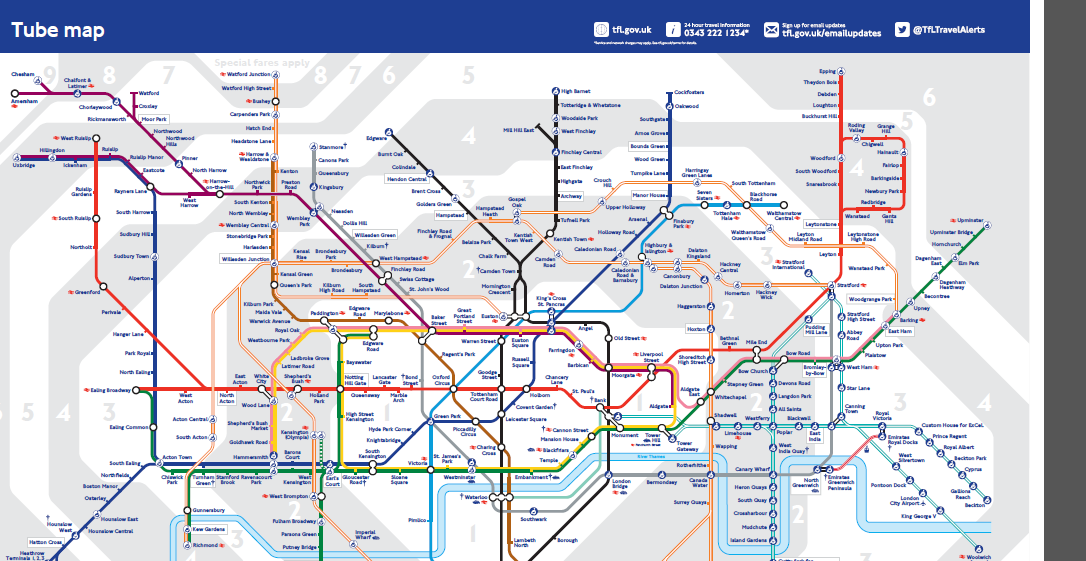
    Tell your students that they are in London. Get your learners to make a plan of where they will go, give them the London tube map and a brochure of the ‘must see’ tourist attractions in London. Your students must make different plans and talk about which lines they should use and what time they should leave. They should use the first conditional in order to make the different plans.

              E.g. If we leave X at 8, we will arrive at 10 at Y.
              If we take the red line, we need to get off at Y. If we get off at Y, we will           then……

    • Video Condition:

    The teacher shows part of a video and then stops it and asks the students to guess what will happen next. The students must use the 1st conditional. Video ideas: You can use Sliding Doors (Gwyneth Paltrow movie) which is about what happens if she gets on the tube and what happens when she misses the tube. Another movie idea is 500 days of Summer which has a split screen moment where the hero plays in  his head a scenario of what will happen when he goes to his ex-girlfriend’s party (expectation vs reality).

    • Election game:

    This is a game (idea found on Teflnet/Smore) where your students have to imagine they  are running for president. Each student gives a speech about what he/she will do if he/she gets elected. You can then ask your learners to actually vote and see who gets elected as president : )

    E.g. If I am elected president, I will give every citizen a free lap top.

    Screen shot taken from here


    • Consequence chain:

    A consequence chain is like writing a chain story but the learners must use the 1st conditional and write about consequences (for more about this go here). How do you set this up? Well, get your students to sit in rows. One student from each end of the room must write a first conditional sentence. Then hand it to the student next to him/her. That student uses the previous student’s main clause to form an if clause and then adds his/her own main clause and so on.

                      Student A: If you go out, you will meet someone.
                 Next student: If you meet someone, you will go on a date.

    You can also have a consequence chain talk about global warming where students talk about the consequence of climate change. So for example, if the temperature rises, the ice bergs will melt. If the ice melts, …… (This idea came from a colleague. Thanks Sue Annan).

     
    • Drill marathon:

    The teacher gives an if clause and the students have to write as many main clauses as they can. The teacher gives a time limit. The student who has found the most correct options is the winner.

    • Songs:

    Here is a list of songs that can be used when teaching the 1st conditional. How can you use the songs? Well, many ways. You can give them the lyrics but first delete some of the words, and before they listen to the song ask them to fill in the missing lyrics with what they think should go there (pre-listening task).You can also get them to fill in the gaps whilst listening to the song. Another thing you  can do is give them the lyrics all jumbled up and ask them to put the lyrics in the right order.
    Titles of songs:
    If you are happy and you know it….
    If you leave me now (Chicago)
    If you are not mine (David Bedingfield)
    If I lose myself tonight (One Republic)
    If the feeling is gone (Kyla)

    Screen shot taken from here

    You can download everything here:
    Fun tasks and the 1st conditional.docx
    http://viewer.docstoc.com/

    var docstoc_docid=’172447652′; var docstoc_title=’Fun tasks and the 1st conditional.docx’; var docstoc_urltitle=’Fun tasks and the 1st conditional.docx’; Of course, there are many other fun activities teachers can use to help their learners with the 1st conditional. I have mentioned just a few. Feel free to leave some more ideas in the comments section below. I will follow up with a post about the 2nd and the 3rd conditional in the following weeks.

    Till next time…….

    Helpful links and some thanks:
    http://edition.tefl.net/ideas/games/first-conditional-practice/
    https://www.smore.com/3n5p-first-conditional-fun
    I would also like to thank Sue Annan and Sandy Millin who gave me some ideas for this post : ).

    the wonderful world of feedback

    The wonderful world of feedback and correcting: focusing on the writing skill.
    I have been correcting and marking loads of essays these days and every time I find myself using different types of feedback, so that gave me the idea for this post. So, let’s have a look at different types of feedback and ways to correct.
    Teacher’s feedback/correction
    • Error code:
    Many teachers use an error code when checking students’ writing. You collect your students’ texts and instead of correcting the mistakes, you use symbols/abbreviations which correspond to language features, you use an error code. So, for example SP. stands for spelling and WW. stands for wrong word. You can make the error code yourself or use something you have found in a book. Either way, you need to make sure that your students are familiar with the error code and know what each initial or abbreviation means.
    Error code with a twist: instead of using abbreviations, you can use a highlighter pen. In this case, each colour correspond to a type of error. This may be more suitable for children.


    Teaching Tip: Are you sure that your learners know what each symbol means? You may have told them over and over again, but you will still get a student saying, ”I didn’t correct the essay cause I didn’t know what S/V stood for” . No need to worry. I have a suggestion for that! Why not try an error code terminology checker task? What is a terminology checker? Well, you write down the key abbreviations in bubbles and project them, your students then have to match the abbreviation with the definition or tell you what means what.
    • Correcting mistakes:
    Well, this type of correction method has probably been used by most teachers. I guess you have corrected your students’ mistakes by drawing a line over the mistake and giving the correct sentence/version. I do this from time to time, but only when I think my learners do not have the knowledge to correct it themselves.
    Teaching tip: Instead of just correcting their errors why not challenge your students a bit? Once you have corrected their mistakes, you could make little exercises/tasks which are connected to their errors just to help them practice with the structures/phenomena they are struggling with (I have written a post about feedback Q & A. Check it out here).
    • Comment bubbles/Dialogue with your student:
    When correcting your learner’s text it is a good idea to ask questions related to some of the information you find in the text, especially comments related to the content. Something may require more analysis, so you can make a comment bubble and ask, ”What do you mean?” or you may want to make a comment on something that you find interesting and say, ”Great idea!” or ”I totally agree”. The comments you write are totally up to you. Once you hand back the texts, your learners can reply to the questions you ask and then you have a short dialogue.
     
    • Oral feedback:
    If you are really tech savvy or if you want to be a bit more fancy, you can send your learners oral feedback or share a YouTube video. The sky is your limit fellow teacher. I have used vocaroo. You go to the website, record yourself speaking and then send your feedback to the learner. One of the benefits here is that the feedback is saved and cannot be lost or eaten by the dog!
                                             http://vocaroo.com/player.swf?playMediaID=s1j71mo4p0pf&autoplay=0
    • Ticking a checklist:
    You can make a checklist and put ticks in the appropriate boxes depending on whether the student has fulfilled the requirements of the writing task or not. This type of feedback is more effective when the feedback has to do with development of ideas or specific structures/ language points. So, if for example, you have told your students to write a story, you can make a story genre features checklist and tick the features that are evident in your student’s story.
              The wording of the teacher’s feedback
    Telling your student everything that has gone wrong in their writing may turn out to be a boomerang. Be constructive and positive. Put a smile on their faces : ). I prefer wording my feedback comments in the following two ways:
    • Sandwich feedback:
    Sandwich feedback is when you give a positive comment, then talk about something your learner did not do well or needs to work on, and then you write another positive comment.
    • You did this/you didn’t do this/you need to:
    Just like the sandwich feedback, in this case start with something positive. Then, mention what your learner didn’t do, and conclude with suggestions on the actions that need to be taken.
    Student generated feedback/correction
    • Peer feedback:
    Peer feedback is a good way to get everybody involved in the feedback/correction process. In this case, one student reads another student’s work and tries to offer feedback or make corrections. You can ask your students to use the error code, correct based on a checklist or  look for something in particular like checking for plagiarism for example. The good thing about this type of feedback is that students often respond well to corrections that come from a classmate. It also makes them more active in relation to the whole correction process.
    Teaching tip: Have you ever used a reading circle during a peer feedback session? I often get my EAP students to sit in groups of four. I tell them to look at the introduction of their classmates’ essay, for example, and check to see if there is a thesis statement, a map, author’s voice etc. I also tell them to look for anything that is missing or is not easily understood. I set a time limit (let’s say five minutes) and when the time is up, they have to give the introduction to the next student in the group. This goes on for a few times. Then, each student gets their essay back, but now it has a lot of comments for them to work on. Of course, during a reading circle, you, the teacher, have to monitor and stick to the time limits you set, otherwise you will have some students with piles of paper next to them, and others with nothing to check.
    • Self- Correction: 
    I often tell my students to take five or ten minutes at the beginning of a lesson, before they hand in their writing homework, to check their texts and try to see if they can find any mistakes. While they are checking, I monitor and offer any help when asked for it. It is very important to get students to read their texts before they hand them in because very often they give you the first draft of something without even checking it!
    • Using writing assessment criteria:
    Instead of you marking your students’ work based on writing assessment criteria, why not get them to look at their work and assess it based on the writing assessment criteria? These type of activities are remarkable when working with advanced learners. It gets your students to reflect on their texts and see what needs work on. I have used criteria sheets in my exam classes and my EAP classes. I strongly recommend you try this with your learners. I would not recommend it for lower level students though because they may have language barrier issues.
    Teaching Tip: When you first introduce writing assessment criteria to your learners, it is a good idea to use a sample. Give them a text that has been assessed based on writing criteria but do not give them the final grades. Ask them to assess it and then show them the grades/highlighted criteria. Once they familiarise themselves with the process, they will be able to apply it to their own work.
    Screenshot of Ielts writing band descriptions taken from here:
    Error/Feedback Log
    It is a good idea to get your learners to check the types of mistakes they make and see if there are errors that occur over and over again. If there are errors that reoccur:
    1.Your learner will realise that he/she needs to address it.
    2. You, the teacher, can include tasks, lessons that will help your learners with structures and language they are struggling with.There are many ways to check your students’ writing. I like to mix and match depending on the learners. I do think though that it is essential to get students to be more active regarding the correcting of their texts.

    You can download everything here:

    Example of an error code
    http://viewer.docstoc.com/

    * In this document (colour code section) the computer automatically corrected my spelling mistake so it says your instead of yor (which was the spelling mistake).

    var docstoc_docid=’172347092′; var docstoc_title=’Example of an error code’; var docstoc_urltitle=’Example of an error code’;Feel free to leave a comment in the comments section.

    Till next time………

    Principles

     Principles underlying my teaching
    I am currently applying for a Delta module 3 course, and one of the requirements is to write about principles underlying your teaching. There is a 750 word limit and you have to mention examples from your own teaching experience. So, I started thinking about that and it is not very easy to write a short summary of the things you think make for good teaching. So, here is what I consider the most important principles (and part of the essay :).
    A teacher should always be willing to learn:
    I have a BA in English, a M.Ed in Tesol and have passed modules one and two of the Delta. I have attended webinars, I like attending conferences and have presented at a few. I do this because I like to learn. I believe that teaching evolves, there is always a new idea or technique out there, and a teacher should always be willing to learn and try out the new things she has learnt.  I am a firm believer of CPD, because when I do the same things over and over again, I get bored. I also think that learning helps me approach my teaching differently and when I notice that something is not working I can read up on it and try something else.  So, learning something new may give me a new idea; make my lesson more interesting and enjoyable for my learners and me.
    A teacher should have a good rapport with her learners:
    I think that students learn better when they have a good relationship with their teacher. What I mean by good relationship is that they feel free to ask questions, they are not afraid of making mistakes and taking initiatives. They come to class happily. I recently asked my EAP students what they think makes a teacher boring, and they said they like their teacher to be funny, friendly and tell stories about her/his life. I totally agree with this. I do like telling my students stories about what I did on the weekend, for example, and I like to make them laugh when I can. I want my learners to feel free to take risks with the new language and not be afraid they will embarrass themselves.
    A teacher should know her learners’ needs and adapt her teaching:
    I really think that there is not just one way to teach something, and that a teacher should be willing to adapt and be versatile. I approach teaching vocabulary or grammar to children differently than when teaching adults. With children I often try to make it fun, with adults I try to connect it with their needs and explain how and when they will need to use something. I also think that when a lesson not working, I need to change it. . When I see that my students have not understood something, I try to find different ways to help them. If one task is not working or an explanation is not good enough, I need to find another way. I often have to stray off my lesson plan with my BE students who do not feel like having a grammar lesson after a very long meeting. They sometimes just want to have a conversational lesson. So, I do that. I change my lesson to suit their needs. My learners’ needs always go first.
    Pair work-group work:
    I think learners learn better when they do things in groups or pairs. I like mixing up groups and pairs as well. I do this so that all my students have the chance to learn and work with another student. I also think this is a good way for shyer students to make friends and for strong students to help weaker ones. Jigsaw reading tasks and lots of pair speaking tasks, for example, are often parts of my lesson plans whilst when I teach EAP, I often set up study groups or group presentations.
                                        
    The most important principle is this one though: a teacher needs to love teaching. I love it. I have been doing it for as long as I can remember. If you do not love teaching, you can’t teach.

    So, what do you think? What principles underlie your teaching? What makes for a good teacher in your view? Feel free to comment in the comments section : )
    Till next time……..

    Marking projects online: the teacher’s survival kit
    I have been marking projects online for some time now (long ones, like 1.500 words) and I must admit… it isn’t easy, although it isn’t that bad either. So, today, fellow teachers, I am going to write a post about the Do’s, the Don’ts and ”OK, this will work” of marking projects online. We do live in the technological era anyhow, don’t we? So, out with the paper and in with the lap top : S.
    A bit of context:
    At the moment, I am teaching English for academic purposes in the UK. One of the tasks students attending these courses have to fulfill is writing a research project.

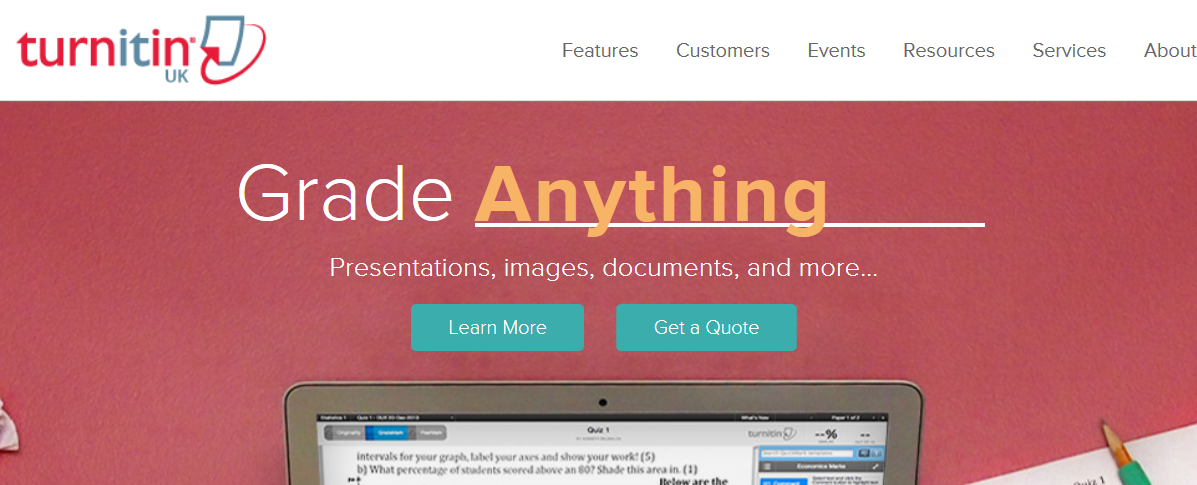
    Turnitin: This week my students used TurnitinUK and submitted the first draft of their research project. For those of you that have never used Turnitin, it is a website where you register, set an assignment and it is where your students can upload their projects (this is the ‘assignment’ you set). Once the learners have uploaded their projects, it checks them for plagiarism and gives an Originality report. In this report you can see which parts of the paper have been plagiarised and it also automatically shows you the source and the section they copied from. It also has a tab called Grademark which you can use to comment on the student’s work and give feedback. There are lots of different sections which can be used for feedback so it does allow for different types of feedback. There are tabs which let you give oral feedback (you can be all fancy and record your oral feedback). You can use comment bubbles which let you make in-text comments. There is also a general feedback area, where you can write texts. You can use different types of highlighters and you can also import generic comments if you think it is necessary (it definitely saves you time).

    Reasons why it is a good idea to mark essays/projects online.

    • It is good for the environment and you/your students save money on paper and… pens. You also save space in your drawers, on your shelves etc.
    • It checks the plagiarism very quickly and quite effectively. There may of course be paragraphs that turnitin or any other software cannot detect but then you can double check by doing a Google check or something else.
    • No one loses their project+feedback. Everything is online. Stored forever.
    • It is good to use as a teaching tool during class. Why? Well, as I said earlier, if it checks for plagiarism, you can see what problems your learners have. You will see if your students have difficulty paraphrasing or if they need help with citations etc. You can then use it with them and show them what they need to work on. The same goes for other learner errors.
    • You can add links to your feedback comments and your students can press the links and practice or check something immediately.

    Take baby steps

    • If this is the first time you are marking online, give yourself some acclimatizing time. For your first project, estimate that you will need about an hour or more to mark it. This is because the software you will be using, will be unfamiliar to you, so you will be trying to figure out how to highlight, how to use comment bubbles etc.
    What else?
    • Give yourself breaks after every two hours. This is good for your eyes, your back and your hands. You can really get bad backaches if you just sit in front of a pc marking for hours.
    • Start with a project you think will be a good one. Choose to correct one of the stronger students first. If you start with a bad project, you will be discouraged by both the online marking and the project : (.
    • Make sure you have good lighting. If you wear glasses, put them on, and if you are using a lap top, always check your battery. You do not want to be losing any of your comments (some websites save automatically though, so you won’t have to worry if the lap top runs out of battery).
    • Close all other website pages. It is very easy to get distracted by a Facebook message, an email or whatever else you like checking out online. Marking projects online requires a lot of concentration, so steer clear of all other online temptations.
    • Warning: do not be fooled by the fact that you probably only see the title of your students’ projects (in Turnitin for example, you see the titles, once you click the title, then you see the project). They are still very long projects and just because you cannot see the piles of paper, doesn’t mean they do not exist.
    Bottom line: It is just like marking a paper project but it just takes a bit of getting used to. I usually read the whole project once. I then check it and make comments, give feedback. Once I have checked all my projects, I go through them once more and tweak my comments or add whatever I think needs adding.
    Do I really have to mark online?
    Well, you are probably already finding material online, reading online, teaching online. It is now time to mark online. In the EAP world, it is not really an option anymore. It is just they way papers are marked. C’est la vie.
    Don’t be scared, just do it : ).
    Till next time…….

    Journals in EAP

    I caught the end of Sandy Millin’s presentation at the TOBELTA Reading and Writing web conference on Saturday.  She had been talking about how she uses journals in her classes which gave me the idea for this post. So, today I will talk about using journals with your EAP students. Is it a Do or a Don’t? Students attending English for academic courses already have a heavy workload, so why add some more work? After using journals with my students at the University of Bristol last year, I firmly believe it is a DO. So, let’s see the How, the Why and the What happens after…….

    The Notebooks/journals
    Get your learners to use a notebook. It is more… let’s say romantic, a reminder of the good old days when everybody used notebooks and not tablets and lap tops. On a more serious note, it is better if they have something in hard copy, something that is easy to carry around the house, put in their bag. Last year, when I worked at the University of Bristol, the notebooks were given to the students and it had the uni’s logo, which gave a fine touch to the whole journal writing process. If this is not possible in your case, your learners can choose their own notebooks and you will get to see what they choose (I do see  a couple of notebooks with hello kitty on your desk : )).
    What should the students write about?
    On a weekly basis ask your learners to write about anything, academic and non academic . You could tell your learners to have two sections in their notebook. One section of the journal can be devoted to their everyday life, and the other section to their academic life where they document, reflect on things occurring in their student life. It wold also be a good idea to give them a minimum word limit and give them some ideas on what to write about.
    Suggested topics for the everyday life section:
    Write about what you did today.
    Write about going to the supermarket.
    Describe your room.
    Write about your plans for the weekend.
    Write about something interesting you saw, experienced.
    Describe a building you saw .. and so on.
    Suggested topics for the Academic section:
    Write a paragraph about what plagiarism is.
    Write about ways you can avoid plagiarising.
    Write down the steps you will take to plan your project.
    Paraphrase a source and write down how you did this.
    Make notes of the parts of the sources you will be using in your research project … and so on.
    Why two sections?
    Well, students attending EAP courses are usually international students who have difficulty, not only with their academic English, but also their general English. Also, keep in mind that it is usually their first time in the UK or other English speaking countries, so they are experiencing a different educational environment as well as a new lifestyle. Writing about everyday life will enrich their everyday vocabulary, writing about their studies will boost their academic English.
    Which brings me to the next question.
    Why should my EAP students write in a journal?
    Well, firstly, they need as much writing practice as they can get. Although academic writing is more important for them, I do find that they lack knowledge of everyday simple English which is why I suggest having two sections in their journals.Another great reason, worth mentioning, is that they can see how their writing has improved. A journal also allows them to see if they are repeating the same errors over and over (maybe next time they will be more careful when using the structure they struggle with).
    When do I collect the journals and what kind of feedback do I give the learners?
    I collect my students’ journals twice a month and my feedback varies. I correct some mistakes, I use an error code and I also ask questions about some of the things they write in their journals. Something like content feedback questions. So, if my student mentions, for example, that he went to the cinema, I then ask, ”What did you see?” I also use smiley faces  : ) or sad faces : ( depending on what they have written. After having a look at their journals, I give them back to them and then my students can correct any errors and answer any questions I have asked them. If I see general errors occurring in most of the students’ journals, like for example, a problem with using the present perfect vs the simple past, I then include this grammar structure in my next lesson or give them links for self study tasks.
    Do the learners enjoy writing in journals?
    In the beginning due to the heavy workload they already have, some like the idea, others are a bit reluctant whilst a few can’t be bothered, but later on, they really get into it, especially when they see something come out of the whole journal writing process. Icing on the cake: It is interesting to see the written dialogue that develops among my students and me in regards to the content questions I ask them.
    Bottom line
    This can be a fun writing task for your learners. It also gives them the opportunity to reflect on some of the things they are asked to do in the EAP classroom. Sometimes writing down a plan of a project makes it less daunting, making comments about a source can help them be more organised and so on.
    So….
    give it a try with your EAP learners. There is nothing to lose. Worst case scenario is that they stop writing. best case scenario, some of your learners will really enjoy it and will become slightly better writers because of it.

    Final thoughts….
    At the moment I am in an EAP state of mind, most of my posts are related to English for academic purposes because, well, that is what I am teaching. I will soon be back with other types of wordy rambles! I hope you enjoyed this post. Let me know if you have used journals with your EAP students and how this worked for you.

    Till next time……..

    A pic of a rainy Sunday in the UK : )