Choosing your teacher

Getting rid of the boring teacher
Catchy title don’t you think? Well, this was the title of a reading text I was using with my students today, so I thought it would be a good idea to talk a bit about this title, activate my learners’ schematic knowledge. So I did, and my, oh my, was I surprised!
Let me begin by giving you a bit of context though.
Context
At the moment, I am teaching English for academic purposes in the UK. The majority of my learners are post graduate students who will be moving on to a master’s degree. Their English is not at the necessary level so they are attending this EAP course. Most of these students are Chinese and this is for most of them, their first time in the UK. Today, my focus was on reading and the aim was to get the learners to make predictions about a text by reading the title. So I did.
Getting rid of the boring teacher-the title.
I asked my students, ”Look at this title. What do you think this text will be about?”
They replied, ”this text is about firing boring teachers”.
So I then asked, ”What makes a teacher boring?” and this is what I got. Some of the answers I expected, others, not so much.
Boring is a teacher:

  • who is not funny and does not have a sense of humor.
  • who only does things from the book/ reads everything from a book.
  • who is strict (?!) not flexible.
  • who does not show any facial expressions, stands still.
  • who doesn’t have a lot of knowledge.
  • who doesn’t tell us stories about her/his life (: O Didn’t see that one coming!).
So this is what, for my learners, makes a teacher boring.  we discussed them in a bit more detail and then ….. Then I decided to become the devil’s advocate and said, ”Yes, but what you may think is boring, I may find interesting”.  That is when they said something which I really, did NOT expect.
”That is why we should have different teachers teaching the same subject. We should be allowed to choose the teacher we want”. ” Huh? Say what?”In fact, one of my students told me that at her college in China, the students could choose the teacher they wanted and that there were teachers with 60 students and others with 3!A learner can do this if it is a one to one lesson but at school? At uni?
Choosing your teacher?
So, when we think of learning styles, do we also consider teacher styles? Isn’t a learner’s learning style affected by his/her personality? Does it actually all come down to rapport? Learning something, for me, has to do with giving and taking. The teacher gives, the learner takes. The learner gives, the teacher takes. So, why not match different teachers with different learners based on what type of teacher the student wants?
I am a happy, chatty teacher, who moves around and makes jokes occasionally, but is that suitable for all my learners? Maybe not. I also run a business in my home town. I have never, till now, thought of giving the students the option of taking a class but choosing the teacher. I know of students choosing subjects cause of teachers or their friends, but choosing among teachers, teaching the same subject? I like the idea! I think it is very learner centered actually. I do not know if it is practical or realistic but it would be a good idea, don’t you think?

Final thoughts
I am really interested in your views fellow teachers so feel free to comment. Does this happen somewhere you know? Do tell : )

Till next time……..

The Newbie Online Presenter

                        Presenting at my 1st Online Conference

Picture: my own : )

Like most teachers, I too have attended many conferences. After having attended many of them, and since I have many years of teaching experience, I thought to myself, “Maybe I should present at a conference”. I did. Face to face conferences (not sure that that is a word but I am talking about the conferences where you have to be physically present) are great for teachers/presenters  because basically:

  • You read up on what you will be presenting so you become even more informed.
  • You meet and share your views with people who are interested in the same things as you.
  • It is great for your CV.
So, I loved my ‘presentation’ experience and decided to try something new. An online conference. I am already an online teacher so why not become an online presenter? I sent a proposal, it got accepted and I will be presenting at my first web conference (Belta and TESL Online Conference on Reading and Writing on the 8th and 9th of August). So today, I made myself a big cup of coffee, I found all my notes and the articles/ books I was reading in order to prepare for the conference and started working on my PowerPoint presentation. Whilst sipping my coffee though, I started thinking about the differences of a ‘face to face conference’ and an online one. So, here is what I think as a newbie online teacher/presenter. Let’s start with some similarities between presenting at a conference and presenting at a web conference.
                         Similarities
  • Reading, reading and some more reading.
My talk is about academic writing and helping students avoid plagiarism, so like all my other conference presentations, I have read  a lot about my topic. I want to be well informed and be able to give the audience a sense of 50 minutes well spent. As this is a topic that has to do plagiarism, I am also extra careful of how I will reference, cite everything and I am very cautious of not plagiarising!! Now wouldn’t that be a big flop? A presenter talking about how to avoid plagiarism, plagiarising : S
  • Rehearsing
Like all the other times, I have rehearsed what I will be saying. I am timing myself and checking to see if I have enough slides for a 50 minute presentation. I think time management is quite difficult so I need to practise as much as I can.
  • Spreading the news
I have also informed my teacher friends about this conference. I have shared posts about the conference on my Facebook page and Twitter.
                          Differences
  • Spreading the news
Yeap, the similarity is also a difference. I think that because this is an online conference, I need to make my social media presence even stronger, so I guess I have to start bombarding people with posts (hmmm ?!?!?!?!) about the when, where and how of this web conference.
  • Technology
At my previous conferences I worried about the technology. I wanted everything to work (lap top, sound, WiFi) because my presentation heavily depended on technology. Now I worry even more! This presentation will solely be delivered online, via the Internet. This means that if the technology in the accommodation I am currently staying at is acting up and being temperamental, my presentation will go down the drain*!! I just hope the WiFi Gods will help me next Saturday. I do have my roommates to rely on if my lap top decides to break down, so no worries in the lap top department. 
* extra worry: I need to think of my time management as well because if the technology goes on and off my time will be affected as well.
  • Interacting with the audience
As an online teacher, I know that interacting online is quite difficult. this makes me wonder how I will connect with the people at home. I do not like going on lecture mode. I find it boring and I will try to avoid it. How? I will ask questions and see what the other teachers have to say in the web conference room’s chat box pod. icing on the cake? The web cam. I need to use it to my advantage (don’t know how but still thinking…..).
  • My Visuals
This is an online conference which means that my visuals need to be very effective. They are the main thing the audience will be looking at. They need to be to the point, clear, no contrasting colours, the right size and in general viewer friendly. Unfortunately, I am not an expert at PPT presentations so my slides will probably be basic! But then again simple is sometimes better than fancy schmancy.
  • Recording the presentation
As this is an online conference, I think it will be easier to find software that will enable me to record the presentation. I will be able to keep it, share it if someone wants to view it and watch it a dozen times and be reflective about what I should’ve, could’ve, would’ve done if I gave the presentation again : ).
Final thoughts
I hope everything goes well. I am presenting on the 9th of August at 5.30 pm CET. I will be talking about academic writing and plagiarism. I will be looking at the steps the teacher needs to take in order to help students avoid plagiarising and I will also give ideas on tasks that can be used in class. For more information about the conference go here. Feel free to leave a comment in the comments section : ).
 Till next time………

                     Induction Week
I started working at Sheffield University on the pre sessional English for Academic Purposes course last Monday, and time has flown without me realising it. There were no lessons this week. This week was all about teacher training and getting informed about how the English Language Center runs their EAP course.  It actually got me thinking about how important training sessions are and how useful these induction weeks are. So, my take on inductions in general and this week’s induction in particular.
One Week of EAP input

Having taught English for academic purposes before and having attended 3 different EAP induction trainings, I strongly believe that a week long induction is necessary. Inductions that are shorter are not enough because the information can be so overwhelming that it is impossible for things to sink in in less than a week!
What goes on during the induction?
Well, you learn about lots of things during induction week. You learn about teaching techniques, you become familiar with what you will be teaching, you look at the materials thoroughly, you get Q & A sessions, you attend various workshops with an EAP focus, you learn about the campus, different technologies, assessment criteria and lots more.
And anything else?
There is also the social aspect. You meet the people you are going to be closely working with. You meet your director of studies before the teaching begins (before you start bombarding the poor lad with myriads of questions about how to do this or that! Notice how I am already using lad?!?!). Meeting the people you are going to be working with in a more relaxed setting is great because no one is stressed. Your conversations are  not just about who taught what and when, students and so on. There is a lot of teacher talk going on, but it is the good kind (teachers talking to other teachers about…..other stuff : P).
What I particularly liked about this EAP induction.
The English Language Center of Sheffield University divided the teachers in two groups. there was a group for teachers who had taught EAP before, and a group for those new to the EAPsphere.
So?
Well, instead of being introduced to EAP related issues or reviewing things I already knew, I got a chance to be a bit more reflective and shared my experience with other tutors who had  EAP experience.  It was actually a bit like a swap shop/ a think tank.
Anything else I like about induction week?
As a teacher who lives abroad, I also got a chance to acclimatise myself a bit better before getting into a classroom.
Icing on the cake?
One of the teacher trainers was Jennifer Spencer, one of the authors of EAP Essentials.
 
So, this was a good week. I learnt a lot and enjoyed it even more. Am I stressed? Yeap. A bit. But it is productive stress. The good one.


Till next time………..

Teaching grammar

                 Teaching grammar like math

Picture taken from Media4Math website. Link here


I have always loved teaching grammar, I am in my element when it comes to grammar. On the other hand, as a student, I had an aptitude for math and although I did not choose to specialise in it, I have found a way to approach and present grammar structures/rules as if they were a math problem. It is my belief that, especially when you first learn a language, it is a good idea to know some general rules behind a structure or simply what goes with what.Now, fellow teacher, if you are rolling your eyes with the whole rules notion, please bear with me, will you? This post is not about whether grammar is or is not governed by rules nor is it about whether we should teach rules or not. It is just about a mathematical approach to presenting and teaching grammar. So, let’s take one step at a time.

                                                   The grammar lesson

Provide context
Never, eva start your grammar lesson by giving them a grammar rule.  Provide context for whatever structure you are teaching. Say you want to teach comparative, show them a spot the difference picture. If you want to teach the conditionals, play a song with if clauses in it etc. etc.
Discovery methods
So, now you have provided the context, get your learners to use the information they have to form the rules. Scaffold and help when necessary but do not tell them the grammar, don’t give them the rules (yet). Help them discover the rules.
Time for math
Now you have provided context and your learners have used discovery methods to figure out how the structure is formed. Great! This is when I bring in some math into the equation. I find that for many structures it is often the case of this+this=that and now before I move on I need to clarify a few points:
  • Of course, where there is a rule there is always an exception!
  • My mathematical approach cannot apply to every single grammatical phenomenon.
  • As a learner, I always liked learning things through tables, so it is only natural to teach the way I learnt because it is easier for me, as a teacher to explain things.
  • This post is not a post about how these phenomena are formed. I have used simple explanations of these particular grammatical structures. Of course, there are loads of stuff that are missing from my board examples : ) I am sticking to basics (grammar for let’s say, intermediate level students).
         +/=/} symbols+tables= grammar(?)

You may now ask, “When do you use the mathematical approach?”  Very often. ” Ummmm, ok! For what?”

  • Conditionals (the traditional 1st, 2nd, 3rd)


  • Wishes/if only

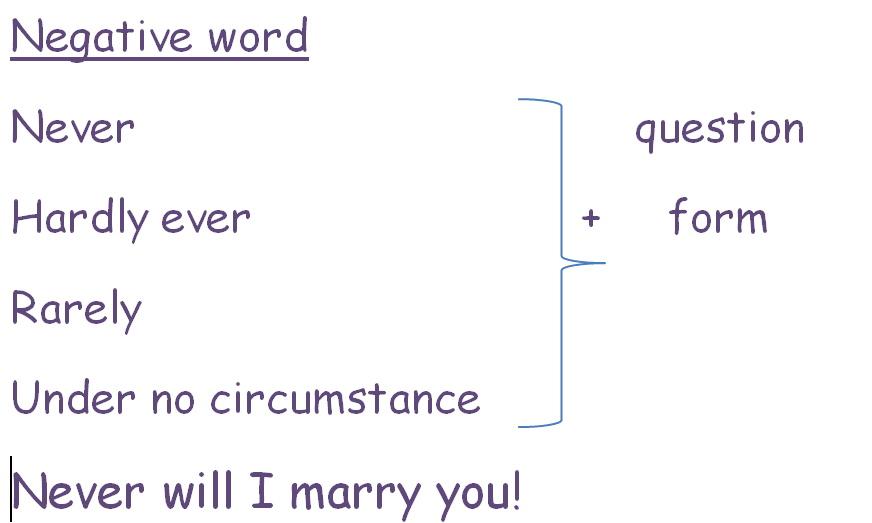
  • Inversion (some types)

  • Adjective Order

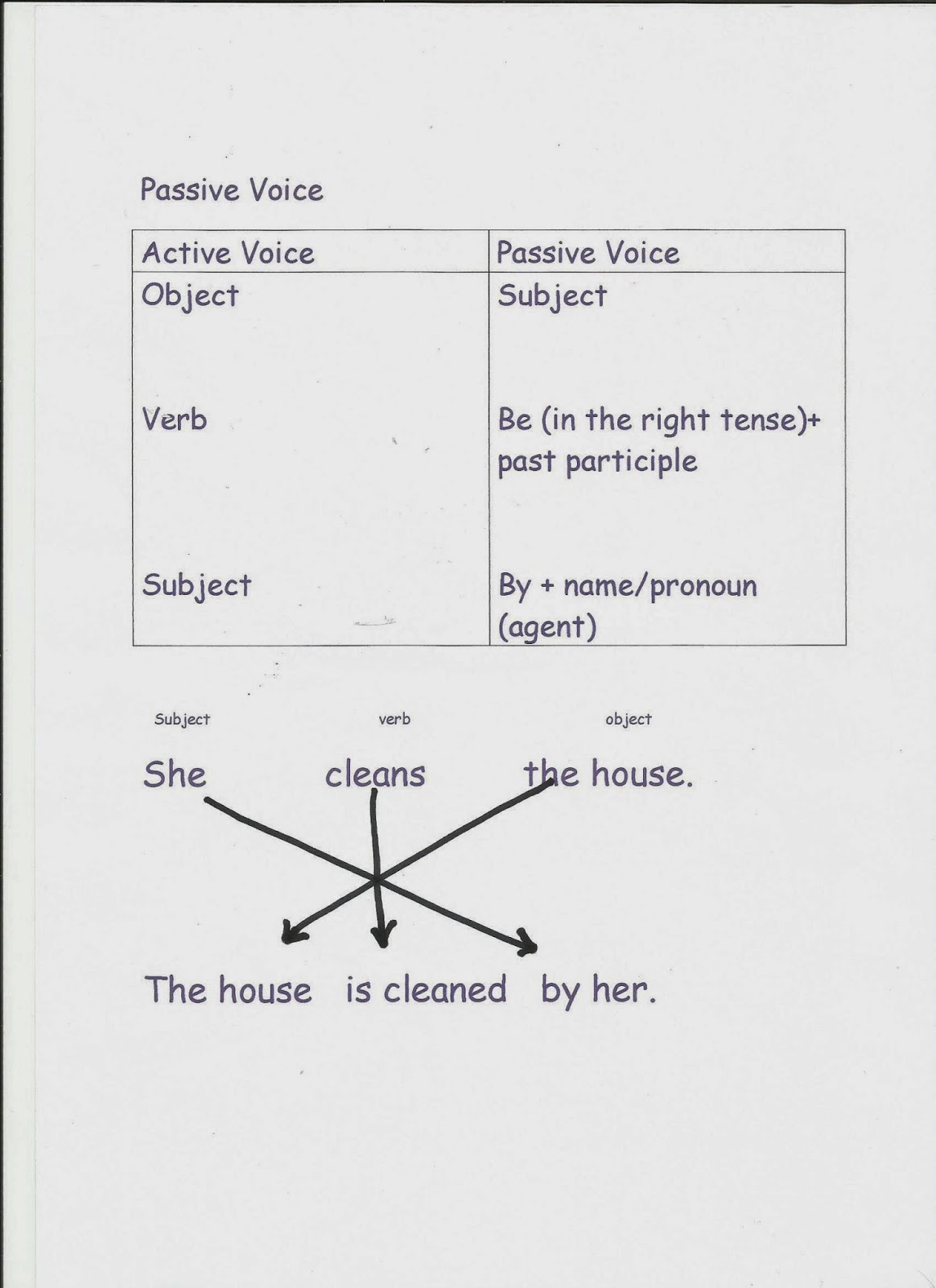
  • Passive Voice

This is what my board and my notes look like when I am presenting ‘rules’. Of course presenting the ‘rules’ does not mean that they will actually learn the language. It may though give them an understanding of some grammatical phenomena. Does this presentation work with all learners? Nope. Some like it, others don’t. So, then I start drawing or use another way to present grammar.

So,
[(context + discovery methods) = introduction of a new point + my math presentation = grammar] + practice and production = new language
or something like that….. Remember, at the end of the day, I teach English not math : ) Coming up…. teaching syntax like math! Feel free to leave a comment in the comments section.
This post has been shortlisted for this month’s Teaching English via British Council blog award. If you like it, go here and press ‘like’ on my post. Thanks for reading : D

You can download everything, here.
Adjective Order.docx
http://viewer.docstoc.com/

var docstoc_docid=’171658147′; var docstoc_title=’Adjective Order.docx’; var docstoc_urltitle=’Adjective Order.docx’; Till next time…………

Study Groups

Study groups: How, When and Why?
We all  include group work in class, but what about study groups after class? I was first introduced to the idea of study groups when I taught a presessional English for academic purposes course a few years ago. I now consider them a prerequisite for my students’ progress, especially in EAP courses, but before I move on let’s take a step back.

What is a study group?
Well, as you know or can probably guess, it is a group (of students) that studies/does tasks together usually as part of their homework. Although my experience of study groups is in an EAP context, I have used them with my other learners as well, so I firmly believe that they can be introduced to ANY group of learners, no matter why they are learning English.

How do I set up the groups?
Well, in my EAP classes, each group was formed based on where they lived (I wanted students staying at the same hall of residence to be able to work together) and their English level (I try to form mixed ability groups). I also put students of different nationalities in each group so as to deter the use of the same L1 In any other context you can group your learners based on their fluency and level. Also, make sure you designate roles. Someone will be head of the group, someone will report on the progress of their work etc. Make sure everyone is going to be doing something. Also, from time to time switch roles. You could also introduce the paper clip contribution procedure to ensure everyone has done something as part of their study group task. So, if each student has 5 paper clips, then that is how many contributions they must at least make to the group.

A twist: I tell my students to record themselves when they are in their study groups. But…..Why?
Well, back in the days when I first got my students into study groups, I asked them about it The discussion went like this:

Joanna: “So, how was it? Did you enjoy studying together?”
Students: ” Yes, It was great. We really enjoyed it!”
Joanna: ” Did it help you learn? Was it easier to do things with the help of your classmates?”
Students: ” Of course, Joanna!!”
Joanna: “……Were you talking in English?”
Students: ………..
and then came the…”OK, so now I want you to record yourselves while doing your group homework, and……. you need to use English when in your study groups!”

The next day they all came in with big smiles on their faces and all volunteered to share their recordings.  “Here, Joanna!! Listen to us, we are talking in English!!” After that, I did not have to ask for recordings, they just brought them to me and when I forgot to ask for the PROOF they reminded me : )
So, recordings ensure that EVERYONE is using English and give my students the opportunity to listen to themselves and how they did as a group and as individuals in this group.

When do I use them?
Ideas for study group tasks
Well, the sky is your limit of course. Here are some suggestions for tasks:

  • Any kind of project or infographic
  • A research project
  • A poster presentation
  • A peer feedback activity where one student looks at the other’s writing/research paper and offers advice
  • A group play, poem song
  • Reading a text and doing the exercises together
  • many more…..
Why I like study groups:
  • Students work together and learn from each other. Such groups help team building and promote cooperation.
  • Everybody has to contribute which gives a sense of achievement to all learners.
  • They have more opportunities to use English outside the classroom.
So, that’s all folks! Feel free to leave a comment in the comments section below.
Till next time…..
                                         Picture taken from:http://hdw.eweb4.com/out/1088465.html

Summarising

Academic Writing:

The post about summarising
Last week, I wrote my first post about academic writing. My focus then was on addressing plagiarism and helping learners develop strategies that will enable them to paraphrase information in order to integrate sources into their own writing and then cite it (you can read that post here). Another writing skill your students need to develop is summarising. In fact, in academic writing summarising information found in a source is as important as paraphrasing or reformulating. A summary that is not paraphrased/ reformulated well may lead to plagiarism, a paraphrase that is too long may lead to word count problems etc.

Picture credits: Illustrator unknown. Accessed online here

One step at a time
Here are some tips on how to get your students to summarise information they found in a source in order to use it to either synthesise information or integrate sources into their own writing (teaching tip: get them to paraphrase/reformulate first and then summarise). Begin with explaining what a summary is. Show them examples of good summaries and bad ones. Elicit their understanding of why one summary is good and why another is bad. Keep in mind that you also need to stress to your students that their summaries need to be paraphrases/reformulations of the original sources because if they aren’t, your students are still plagiarising.
Sentence frames:
So, now they understand what a summary is. You can move on to tasks that have sentence frames. Give your learners a text with its summary underneath it, but erase some of the sentences. At this initial stage your learners only have to fill in a few sentences that are missing.
Video viewing:
Who said you should only summarise texts? Why not start with something fun and something that is a bit easier than a dense academic tense? If you are teaching a general English class, you can choose whatever video you want. The sky is your limit. If you are teaching an EAP class, well, of course the sky is your limit as well. My suggestion is to start with something fun and easier to tackle and then show them a clip of a lecture. The goal is to get them to write a summary of something they have watched. this is challenging of course but fun.
Why use a video?:
  • Your learners can better comprehend because even if they have unknown words, they still have the visual to help them. 
  • It is fun : )
  • It caters different learning styles, engages different skills.
  • They do not have a text in front of them so it is supposedly harder to plagiarise.
Some disadvantages of using the video:
  • they may not know how to take notes and may end up just writing whatever they hear, making it difficult for them to write a coherent paragraph later on.
Jigsaw reading:
I guess you do jigsaw reading tasks with your students, so why not have a jigsaw reading task that will prompt a summary? So, how would you organise this? I suggest you do this as a pair work task. Give half a text to student A and the other half to student B. Each student reads their own text and makes notes of some key points. Once both students have read their texts and have made some notes, you take away the texts and just let them keep their notes. They then have to use their notes to tell each other what the text is about and write a short summary.
Summary challenge:
 You can start with summaries that are long paragraphs of say 150 words and move on to one sentence summaries! Add some drama, will you? Your learners need to actually be able to write one or two line summaries when they are integrating sources into their work, so start with something easier and move on to something harder.I would once again suggest writing a group summary, a pair summary and then each student works on their own summary. Give them a word challenge as well. Highlight numerous words they are not allowed to use in their paraphrased summaries.
Final thoughts
Teaching your learners how to paraphrase, reformulate and summarise are very important skills. Students require a lot of training before they can become successful writers. Approaching academic writing in a fun way,scaffolding your learners, mixing and matching tasks, doing group work and pair work aims to help them better their writing skills. Feel free to add any other summarising ideas in the comments section. I love getting feedback from you guys!!

Till next time……..

Online teaching -the niche

The niche

I attended a live class by Jack Askew yesterday as part of WizIQs Teachers Teaching Online MOOC (if you want to learn about online teaching, I strongly suggest you enroll NOW. It is excellent!). The title of his presentation was ‘ Being a Successful Online Teacher: Find your Niche, Build your Brand, and Constantly Grow’ (you can watch the recording of his talk if you enrol!). It was a very informative session, he gave a lot of tips and it was an hour well spent. One thing he said, and something many people agree on, is that if you want to be a successful (freelance) online teacher, you need to be known for one thing you are really good at. You need to create a niche. A specialisation may I add. But do you or should you? Don’t get me wrong, I totally agree that nowadays, you cannot do everything well, you need to specialise, but as a teacher, why can’t my niche be teaching? Won’t I be a successful online teacher if I do not specialise?And, if I specialise, I may be a successful online teacher, but will I be a happy one? These are just a few thoughts……….

All in favor of the ‘niche’ say, “I”
” I”  but “Why?”

  • Well, practise makes perfect, so the more you specialise in something, the better you will become (well, at least that is what common sense says). You become an expert!
  • You target a market. You find people people who are interested in your ‘brand’, your specialisation. You have loads of experience teaching Business English, you are into EAP, you like teaching with songs. Find your niche, make a brand and promote it.
  • You create good resources, your own material and you do not have to be constantly looking for and creating material. You do not have to teach an Ielts class, make the material for this class, and then prepare new stuff for your Business English class. You create your own , solid bank of material and enrich it.

BUT…… and yes, there is always a BUT

  • If I specialise in one field, won’t I get bored after a while? If I am bored, won’t my learners be bored? I like variety and new challenges.
  • Don’t I close my door to ideas, teaching trends and mixing and matching? Taking a Business English idea on leadership and turning it into a session for my young learners about what makes a good leader, is what I do now. As an online teacher with a specialisation, will I be able to do that?
  • Can I not be good at two or three things?
I don’t know about you guys but I like to stick my fingers in many pies! I enjoy teaching Business English (online, yes , who would have thought?), I like teaching EAP, and I like teaching young learners. I guess for me, finding my niche is gonna be so damn hard… unless I could have a niche for teaching, but then how would I survive the online teaching market? Hmmm then again, if you look at this ramble, two out of three of my likes are ESP so maybe that’s my niche : ) Dunno about you guys, but I am on the fence about this one. I understand why I need a niche to be a successful online teacher, but I am not sure if I wanna have one. I am doomed : P
Final thoughts
Very confused……sitting on a fence. Feel free to share your thoughts in the comments section. I really want to hear from people who DO have a niche.

Till next time……..
                             which will be very soon cause, well I have a lot of free time.

Picture taken from: http://images.search.yahoo.com/images

EAP: plagiarism

Academic Writing: Helping your students avoid plagiarism step one

The post about addressing plagiarism & paraphrasing
The big P word. Plagiarism. If you have taught English for academic purposes, you know this is a buzz term. As an EAP tutor, I am always going on about what plagiarism is, how to avoid it and I thought it was about time I wrote a short post about how I address plagiarism and how I help my students avoid plagiarism when paraphrasing sources. Now, this people is a tough cookie for both the teacher and the student!! This is my approach….

                                One step at a time

1. Address plagiarism
You need to be clear about what plagiarism is from the beginning and how it is important to cite other people’s views and not just act as if they are your own. Show them videos about plagiarism from YouTube, give them definitions from your own sources, from dictionaries, the lots. It is important to inform them. Also, be clear about the tolerance of plagiarism because sometimes it may not be deliberate (if your students mistype a date for example, do they fail or do you give them another chance?). Another important thing you need to keep in mind is that different fields use different referencing systems, so steer your students towards the one they will be using in their discipline.
Fun ideas: get your learners to make little projects (videos/infographics/posters/animations) of what plagiarism is.
Not such a fun idea: Ask loads of Q&As as well as CCQs related to what plagiarism is.

2.The plagiarism police
“You will be caught!” : S. Yeap. Let them know that you will find the plagiarism. Ask your learners to bring photocopies of the texts they used and paraphrased. Tell them hey should highlight the paragraphs they paraphrased. Inform them of the different software you will be using to scan their papers and detect plagiarism. It is a good idea to suggest that they check their papers for plagiarism with the same software as well.
So, now your learners know what plagiarism is expect the following discussion (I know I have had it a zillion times!):

Student: “Ok! I don’t want to paraphrase sources because it is hard and I will plagiarise.”
Teacher: “Hmmmm or ……………”
Student:  “Yes, I will quote. I will use quotation marks for everything I put in my paper and I will copy their exact words and everything will be fine!”
Teacher: “It is not a good idea to have an essay full of quotes and no paraphrases. You also need to synthesise your information. So, you need to learn how to paraphrase and summarise information. Don’t worry. You can do it! That’s why I am here!”
Student: : ( …….turns to   : )

3. The anti-plagiarism toolkit
Time to bring the big guns in. Let’s get down to business people!Your students need their anti-plagiarism toolkit. So, time to equip them with the strategies they need to avoid plagiarising their sources when using sources in their texts and not just quoting directly. Time to talk about paraphrasing.

Paraphrasing
This is the most important skill your students need to develop in order to avoid plagiarising sources. Of course, there are a million ideas out there and loads of activities you can use. I will just mention a few things I do. First, let me tell you though that my motto is start simple and then move on. Brick layering.
Start with some simple activities:

  • Key word transformations

Well, yes, why not use key word transformations to engage your learners in exercises that will force them to paraphrase? You can begin with something that builds their general English skills. Remeber….baby steps. The good thing about key word transformations is that since they are part of the Cambridge language exam (FCE,CAE,CPE) you find loads of books and websites with key word transformation activities. So, if, for example,your EAP students are B2 level learners, you can use any key word transformation activities that are for that level. They also give you the opportunity to gauge your learners grammar knowledge and you can focus on structures they are struggling with. Engaging in key word transformation activities does not mean that your learners are out of the woods, it is just a way for them to practice rephrasing short sentences.

  • The Academic Word List (word families-synonyms)

Your learners should download the Academic Word List and familiarise themselves with The Thesaurus (any thesaurus). Get your learners to write down word families and find synonyms. Enrich their academic vocabulary! The richer their vocabulary, the more lexical choices they have.

  • Nominalisation/Active voice vs Passive voice

Find tasks that practice nominalisation and the two voices. Paraphrasing is not just about using different words, it is also about grammar. In order to avoid plagiarism, you gotta get your learners to change structures, word order, forms. Noun phrases and the passive voice are found very frequently in academic writing, so practicing them will help your students feel more comfortable with these structures, thus they will probably use them whilst paraphrasing.

  • Noticing activities

Show your learners good examples of paraphrases. Use an overhead projector/smartboard and some sort of before and after examples and get them to notice the differences.I think it is better to do this as a group task and then follow up with some activities they have to do individually. Check to see if they have noticed all the changes and the differences in the structures, vocabulary etc. I get my learners to make tables of some common phrases and paraphrases/alternative phrases.

Illustration by Daniel Rhone accessed here

                The bigger picture
So, hopefully, with all this training, your learners can paraphrase at least at a sentence level, now it is time to paraphrase real texts. Time for some group work!
Divide your class into small groups. Give them a text and tell them to paraphrase it as a group. Then, tell the groups to swap their paraphrases. Once each group has another group’s paraphrase, the new group needs to underline/highlight anything they think has been plagiarised and once they have done that, they give the text back to the original group. Each group now has their own paraphrased text with feedback from another group. They use this feedback to paraphrase more. The paraphrasing should go on until each group is happy with their final product.
I then suggest getting your learners to practise in pairs and finally individually.

Advice I give my learners: try to paraphrase into simple sentences and then aim for more complex structures.
Once they have paraphrased the sources they want to use, they cite them accordingly, and well, they will have a plagiarism free text.

Final thoughts
Good luck on your anti-plagiarism venture fellow teacher. Feel free to add any other paraphrasing tricks in the comments section. this post will be followed up by a post on summarising so talk soon : )

Till next time……….

I will be talking about plagiarism on the 9th of August at the Belta & Tesl Toronto Web Conference on Reading and Writing. Log on, will you? For more info go to the Belta Belgium or Tesl Toronto website

Conference logo courtesy of Belta Belgium and Tesl Toronto

Games

Let’s play….. for five minutes or more
Games….teaching in disguise! So, whenever I have a few minutes to spare or I feel my learners are feeling a bit restless and they really just wanna get out of the door, I say, ” Ok, let’s play a game”. Their little (or big) eyes light up and  I think, “Yes, we are back on track!” Today I will write about a couple of games that require almost no prep nor props whatsoever!!!You don’t need any technology either. The only thing you may need is a white board and marker pens. Here are some (childhood) all time classics that will make the lesson more fun!
Warning: there may be a few twists to the games : )
Hangman
Well, you all know this one, but may I suggest playing it in various ways like the teacher against the class, group A against group B or pair hangman ? Also, instead of hanging the man (?), you could also make it a bit more challenging for your learners by telling them they can only suggest wrong letters equivalent to the number of letters in the word you have chosen. So, for example, if you have chosen the word flower they can only suggest 6 wrong letters and then they get hung!
Skills: spelling, vocabulary


I Spy (with my little eye)
I used to play this as a child and now I play it with my students. If you have never heard of this game, this is how it is played. You look at something in the class but you do not tell your students what you are looking at. You then give them little hints about what this object looks like. So, you begin by saying, ” I spy with my little eye something brown” they can make one guess and if they do not find it, you give them more information until they guess what you are describing.
Skills: vocabulary (especially adjectives)/speaking.

Word snake
Someone writes a word on the board and the next person needs to write a word that starts with the final letter of the previous word. So, for example, I write the word flower, the next person has to write a word that begins with an R e.g. Rug, then the next student has to write something that starts with a G and so on. If a student misspells something or takes to long to find a word, he/she is out of the game.
Skills: spelling, vocabulary.

                                Flower
                                             rug
                                                    go

Kill the text
I write a text on the board and then split the class into groups, then a person from each group chooses one word from the text and makes a sentence. By making a sentence with that word, the student kills the word. Once all words have been used to make sentences, the text is killed!
Skills: grammar/vocabulary/syntax


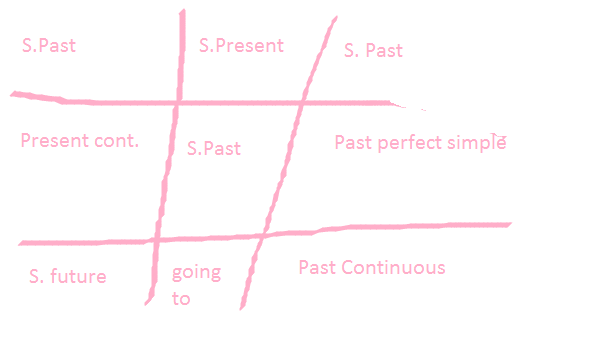
Grammar Noughts and Crosses
I bet you have played noughts and crosses at some point in your life. A good way to use this in class is by adding grammar points in the noughts and crosses grid. So in order for your learner to be able to write a nought or a cross, he/she has to use this grammar point correctly. I usually put tenses in the grid and the learners have to make sentences using the tense correctly.
Skills: any grammar point 


I went to the supermarket (chain game)
If you have a good memory, this is your game. If you don’t, then… SKIP this one! So, I start by saying,” I went to the supermarket and bought eggs.” Then, the person next to me says,” I went to the supermarket and bought eggs and milk.” The student after that says, “I went to the supermarket and bought eggs, milk and carrots” and so on. You have to say the food in the right order and not forget any of them. I suggest you scaffold your learners by helping them with descriptions of the items if they are struggling to remember the words (never reveal the word though!).
Skills: this is a great way to revise vocabulary related to food.

Final thoughts
As we all know, there should be a bit of time for a game from time to time. Games are enjoyed by everyone, so play with ALL learners no matter why they are learning English. Oh, yes, mind my pics, will you? Do you know how hard it is to draw with a mouse?!?! : P

This post has been shortlisted for this month’s (July) Teaching English-British Council blog award. If you like it, go to the Teaching English-British Council Facebook page and press ‘like’ where it says this post has been shortlisted. Thank you  for reading : D

Till next time…..


Reflections

Taken from: Public-Domain-Photos.com

The #Sandwichreflection
It is the end of the academic year, students are getting a bit restless, some teachers are as well : ). Summer is around the corner. So, what time is it? Time to reflect, of course, but with a twist. I am sure you know of the sandwich feedback (good point- bad point- good point) so how about trying out a kind of sandwich…. reflection? Why not write about a professional or academic achievement, follow this by a weakness ( or weaknesses) and then another strength.? You may now ask, “why this way?” I don’t know about you guys, but very often when I reflect, I am so nitpicky that I find it very difficult to see my strengths, and I often just focus on my weaknesses. I dwell over the should’ve, would’ve, could’ve. So, time to make a sandwich and as dessert….. an action plan : ). What kind of reflection post would this be without an action plan?

Note to the reader: I would like to make this into some sort of blog chain, so I have asked other teachers/bloggers to follow up with blog posts of their own reflections.

                                                The Sandwich

A good moment- an accomplishment
I completed and passed module two of the Cambridge Delta. I do not know about you, but for me, the Delta was a tough cookie. I was teaching many hours a day, trying to run a business and squeeze in time to study. My motto those days was, “Stress, worry and complain”. But, I did it! I passed, and now the wonderful world of module 3 awaits.

MyWeakness(es)

  • Bad choice of course book for my C2 level students. They were bored, I was bored. The material was outdated. I had used this book in the past and it had worked, but this time it was a very bad choice. I ended up supplementing a lot and in the end we just stopped using it!
  • Too many projects going on at the same time, I was swamped! Whatever webinar I saw I would say , ” Oh! That’s great! I am gonna do this” and then I would forget. A MOOC? “Yes! I will try this as well” (I didn’t finish that either). I find lots of things out there extremely interesting, I get overwhelmed and end up doing nada!
  • Teaching grammar points I just don’t like teaching. This is an all time classic weakness. If I do not like the grammar point I am teaching, my delivery is, well, bad. For example, I find teaching modal verbs extremely hard. I never do this well! Teaching modal verbs this year was once again not my greatest moment!
Another good moment this year
I presented at two conferences (TESOL Greece and Belta day). I loved it. I met lovely people. Got to share my views and hear their thoughts. It was a such a rewarding experience and I look forward to the next conference, whenever that is!
My action plan
  1. Regarding course books, I need to get out of my comfort zone and be a bit more adventurous with books. So, I found a book that worked with my students a couple of years ago? That does  always mean it will work the next year! I actually have this year’s flop to prove it! In Greece at language schools you are very often expected to use a course book, so I am not going to chuck em out. I am going to scan them better. I will ask my colleagues what they are using. Maybe even try a few pages out with my students before concluding to one or the other.
  2. I really need to manage my time more effectively, be more conscious about my needs as a learner and make notes of the dates of the webinars, MOOCs or whatever else is out there and has grabbed my attention. I also have to accept the fact that I cannot attend everything, I just need to screen them better and choose the ones that are actually connected to my needs as a learner.
  3. Regarding teaching my least favourite grammar points, well that’s a hard one. I could ask a couple of colleagues to observe them whilst they are teaching and get some ideas. I could get suggestions from my learners about how they would like me o approach a particular grammar point (what tasks they like doing, how they like to learn). I could also search the net for more fun things to do or…. any other suggestions? (yes, I am talking to you the reader).

I really enjoyed this academic year, I had  some very good moments and some difficult ones. I look forward to the challenges and the happy moments ahead….

You have been tagged fellow teacher and feel free to tag someone else if you wish : D
Angeliki Asteri
Ola Bakri
Sally Fryer
Lia Kalianos
Vicky Loras
Gemma Mitchelson
Vicky Papageorgiou
Theodora Papapanagiotou- read her post here
Roseli Serra
Hana Ticha-read post here
Vedrana Vojkovic- read post here

Final thoughts
If you wish to take part in this blog chain, feel free to add your blog post in the comments section!!! I do suggest you try it though cause I think it is a great way to reflect especially if , as a teacher, you do tend to focus more on the negative aspects than the positive ones.I will be back with a the links to  the reflections of the lovely teachers I tagged and a couple of guest posts as well 🙂 There is also a hastag #sandwichreflection (thnks Hana and Vedrana for the hashtag suggestion!) 

Thanks for reading……

Till next time……