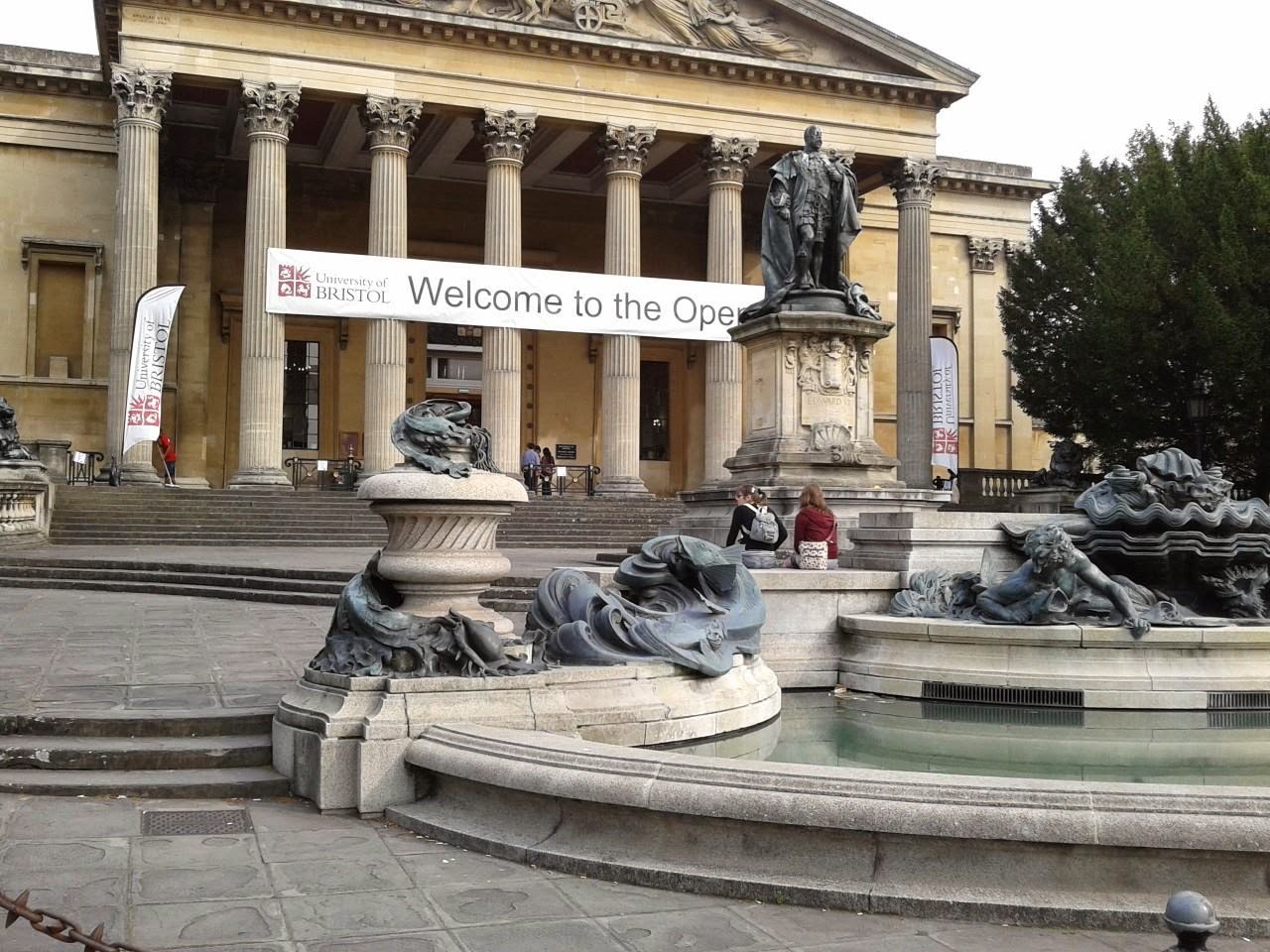
EAP course

EAP courses: a short overview for the newbie : D

A couple of teacher friends who will be teaching EAP (English for academic purposes) have been asking me questions about what to expect and what it is like. Well, first of all, for me, EAP courses are fantastic (I have taught on 3 pre sessional courses and am going to Sheffield Uni this year for my fourth course, yay!) and a chance to go from my everyday General English classes to something different and challenging. Yes, it will be challengeing but don’t worry you can do it!
 So, for all you newbie EAP tutors congrats on the new job, this one is for you!This post is a very brief but quite a concise descrioption of what to expect when teaching an EAP course for the first time.

What will I be teaching?
Syllabus of course may differ, from course to course, due to duration, learners’ English level and many other factors but at core they are the same. Here is a brief description of what you will be teaching:

  • Academic writing

Forget about the Ielts academic writing you have been teaching so far. Now, you will be helping your learners write research papers, assignments. You need to train them to use strategies like paraphrasing, summarizing information, synthesizing information and many others. They learn what a thesis statement is, a map, how to show their view in a research paper as well as how to support their main argument with other arguments. You also have to help them avoid plagiarism because there is almost next to zero tolerance of plagiarism!

  • Academic Listening

Your learners will be attending lectures so part of academic listening is to prepare your learners for that.  Your learners will attend, listen or watch a lecture. Your role is to ensure your learners make use of the strategies that will help them identify what information is important, and what  is not. You will probably have to devote some time on teaching them how to take notes. May I suggest brushing up your knowledge on Cornell notes?

  • Academic Reading

Here you will practice reading with your learners and engage in tasks that help them recognise the rhetorical functions so as to understand a text, skim, scan, understand the main and supporting ideas and guess the meaning of unknown words etc. so that they are able to understand complex academic texts, journals and books that are relevant to their studies.

  • Presentation Skills

In your presentation skills classes you will be giving guidance related to how to give a presentation. You will teach them what to include in a presentation (usually PowerPoint) and what not to include. You will give advice on the appearance of their PPT slides and their delivery of a presentation. You will also practice Q & A segments so they are prepared to answer any questions that come their way and are relevant to their chosen topic.

  • Seminar skills
Your students need to be able to express their views on issues related to their subject skills in study groups and in their classes. They need to hold discussions with their peers, negotiate, come to mutual decisions, argue their views and so on. This is what you will be doing in this class. You will equip your learners with the speaking micro skills that will enable them to do so.
  • Assessment?
This depends on the EAP course you are teaching. You will definitely be assessing in one way or another your learners so be prepared for a heavy workload : )

What about technology?
The university you will be teaching at will probably have smart boards and computers everywhere. You will also probably have to use MOODLE or Blackboard as a learners’ management system. I have never used MOODLE so I cannot talk about that, but as far as Blackboard is concerned, it is easy to use. You can share things with your colleagues and students. You can use it to email, use discussion boards, get your learners to submit research papers etc.

Buzz terms you may need to read up on

  • critical thinking
  • autonomous learning
  • peer evaluation/feedback
  • plagiarism

    Feel free to add whatever you feel is missing. I have also written a post about top resources when teaching EAP so have a look here.
    Till next time

    Pre sessional EAP courses

    Pre-sessional EAP courses….. bits and bobs

    This post gives just a few tips on the whole pre-sessional EAP experience in the UK. So, before we move on you may ask, ” What’s a pre sessional EAP course?” In a few words, it is a summer course run by universities (usually their language centers) and the students attending these courses are international students (mostly Chinese) who have been accepted on an MA (or undergraduate program) by this or other universities. The aims of these courses are many but in a nutshell, the goal is to prepare learners for the university experience and help them improve their academic English. The courses are usually 4, 6 or ten weeks long.
    I have taught on three courses at great universities with lovely managers and colleagues. It is a demanding but rewarding experience and I strongly suggest you try it. Some of my friends though ask me ” How can I do it?” which gave me the idea to write this blog post. Here are a few suggestions:
    Where do I begin?

    • Draft a CV which is connected to your studies and teaching experience. Apart from a CV, it is important to write a cover letter too with a more detailed description of what you have done and how it is connected to the EAP job you want to get. Some universities have application forms and a CV or cover letter is not necessary, but having one always comes in handy, even if you just copy paste stuff from your CV to the application form!

    Where can I find job adverts?

    I go to two websites:

    How can I prepare for an interview?

    You can’t really prepare but if you want to read a bit on EAP, I would suggest reading EAP Essentials: A teacher’s guide to principles and practice by Alexander, Argent and Spencer. Of course you can always do a Google search and reads loads about EAP.

    What should I expect before/during an interview?

    First of all, don’t worry if you do not live in the UK because many universities hold telephone or Skype interviews. I only have experience of Skype interviews as I live in Greece. If you do live in the UK, well then you go to wherever the interview will be held : ).
    If you get an interview invitation, some universities may ask you to do some tasks prior to the interview like provide a lesson plan of an EAP session you taught or assess a research paper.

    What kind of questions do they ask?

    Loads! Here are a few to get you thinking.

    • Describe a difficult situation with a teacher or student and how you dealt with it.
    • What are your three best teaching features?
    • Tell us about your education/qualifications and how they have shaped your teaching.

    and some EAP questions…

    • What are the aims of a pre sessional course?
    • What’s the difference between an EAP course and an Ielts academic English course?
    • What do you consider plagiarism and how do you deal with plagiarism? How can you help your students avoid plagiarism?
    • What are the differences between EFL and EAP?
    • What technology do you use when you teach EAP? Tell us a few of the EAP websites you go to when you teach your students.

    they may also ask

    • Why do you want to work for………. university?
    • What could you bring to our university? (yes, I got that one)

    and many more questions.

    So, that’s all for now. Good luck with your interview : ) Feel free to add any other suggestions and tell me how you did!

    Till next time……


    The PPT "effect"

    PowerPoint. A great tool. Before going on I must say that I am not a PowerPoint wizard nor are my PowerPoint slides and presentations the quintessence of PPT. I do have experience teaching how to give a PPT presentation though and have assessed many students presentations at an academic level (in the UK). So, I thought I would give my views on what makes a good presentation.
    The slides:

    • Avoid using too many colours on your slides. This is a presentation not a rainbow. Also, make sure  your colours do not contrast. Seriously, you do not want your audience squinting unless you are an eye doctor looking for patients.
    • I would suggest font size more than 28pts and in the margin. The margin is there for a reason. Stick to it.
    • Make sure the accompanying pictures are related to what you are saying. Sure teddy bears are great but they do not go with everything!
    • Avoid long texts. Bullet points are more effective as your audience can focus on what is one the slides. If you cannot remember everything make notes on cards but please avoid mega giga texts. You will lose your audience who will be trying to read what you have written and not focus on what you are saying.
    • Graphs/pie charts. They are very important. Try not to use raw data tables as they are tiring and do not reveal much information (your audience will have to figure out what you are trying to point out- is that what you really want?). Try using pie charts and diagrams which have percentages on them and different colours. Use visual aids which allow your audience to see what you are talking about.
    • Animations. Now they are fun and flashy right? They are a great way to attract your audience but they may also have the opposite effect. Use them with caution and prefer using one or two types of animation patterns throughout your PPT presentation.

    How the PPT should be organised:
    Your PPT is like a book. Have a contents page=an overview. Your audience needs to know what you are going to talk about and this is a great way to guide him. Then you talk about what you want to talk about. After have a slide with references/bibliography/links and a thank you slide.
    Your presentation:
    Be confident. You made the presentation so no one knows better than you what it is about. Prepare. A good way to prepare is by recording yourself while presenting at home. Then you can look at yourself and improve what you have done so far. Look at your audience. Do not fidget but do move around a bit to make your presentation more vibrant. Please, oh please hands out of pockets : )
    Interact with your audience whenever possible and turn off the lecture mode. You want your audience engaged not asleep. Also, allow time for questions otherwise why even have the presentation? You can just sit in front of a mirror and talk to yourself!
    A practical point: Do not just save your presentation on a USB stick. Email yourself/save it on your hard drive. Also make handouts of your presentation. Some people like making notes and having your slides on paper with lines will help them with that. It is also helpful for people who cannot see from far away.
    Finally, and this is probably the cornerstone of any presentation, Smile.
    I would really appreciate any other ideas on the Do’s and Don’ts of PPT presentations. They are used widely at conferences and are an integral part of the academic scene.