Teaching grammar

                 Teaching grammar like math

Picture taken from Media4Math website. Link here


I have always loved teaching grammar, I am in my element when it comes to grammar. On the other hand, as a student, I had an aptitude for math and although I did not choose to specialise in it, I have found a way to approach and present grammar structures/rules as if they were a math problem. It is my belief that, especially when you first learn a language, it is a good idea to know some general rules behind a structure or simply what goes with what.Now, fellow teacher, if you are rolling your eyes with the whole rules notion, please bear with me, will you? This post is not about whether grammar is or is not governed by rules nor is it about whether we should teach rules or not. It is just about a mathematical approach to presenting and teaching grammar. So, let’s take one step at a time.

                                                   The grammar lesson

Provide context
Never, eva start your grammar lesson by giving them a grammar rule.  Provide context for whatever structure you are teaching. Say you want to teach comparative, show them a spot the difference picture. If you want to teach the conditionals, play a song with if clauses in it etc. etc.
Discovery methods
So, now you have provided the context, get your learners to use the information they have to form the rules. Scaffold and help when necessary but do not tell them the grammar, don’t give them the rules (yet). Help them discover the rules.
Time for math
Now you have provided context and your learners have used discovery methods to figure out how the structure is formed. Great! This is when I bring in some math into the equation. I find that for many structures it is often the case of this+this=that and now before I move on I need to clarify a few points:
  • Of course, where there is a rule there is always an exception!
  • My mathematical approach cannot apply to every single grammatical phenomenon.
  • As a learner, I always liked learning things through tables, so it is only natural to teach the way I learnt because it is easier for me, as a teacher to explain things.
  • This post is not a post about how these phenomena are formed. I have used simple explanations of these particular grammatical structures. Of course, there are loads of stuff that are missing from my board examples : ) I am sticking to basics (grammar for let’s say, intermediate level students).
         +/=/} symbols+tables= grammar(?)

You may now ask, “When do you use the mathematical approach?”  Very often. ” Ummmm, ok! For what?”

  • Conditionals (the traditional 1st, 2nd, 3rd)


  • Wishes/if only

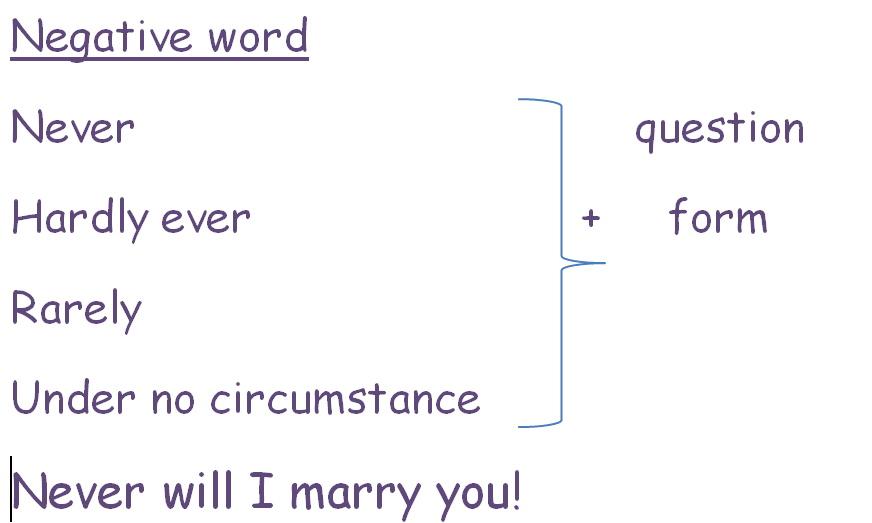
  • Inversion (some types)

  • Adjective Order

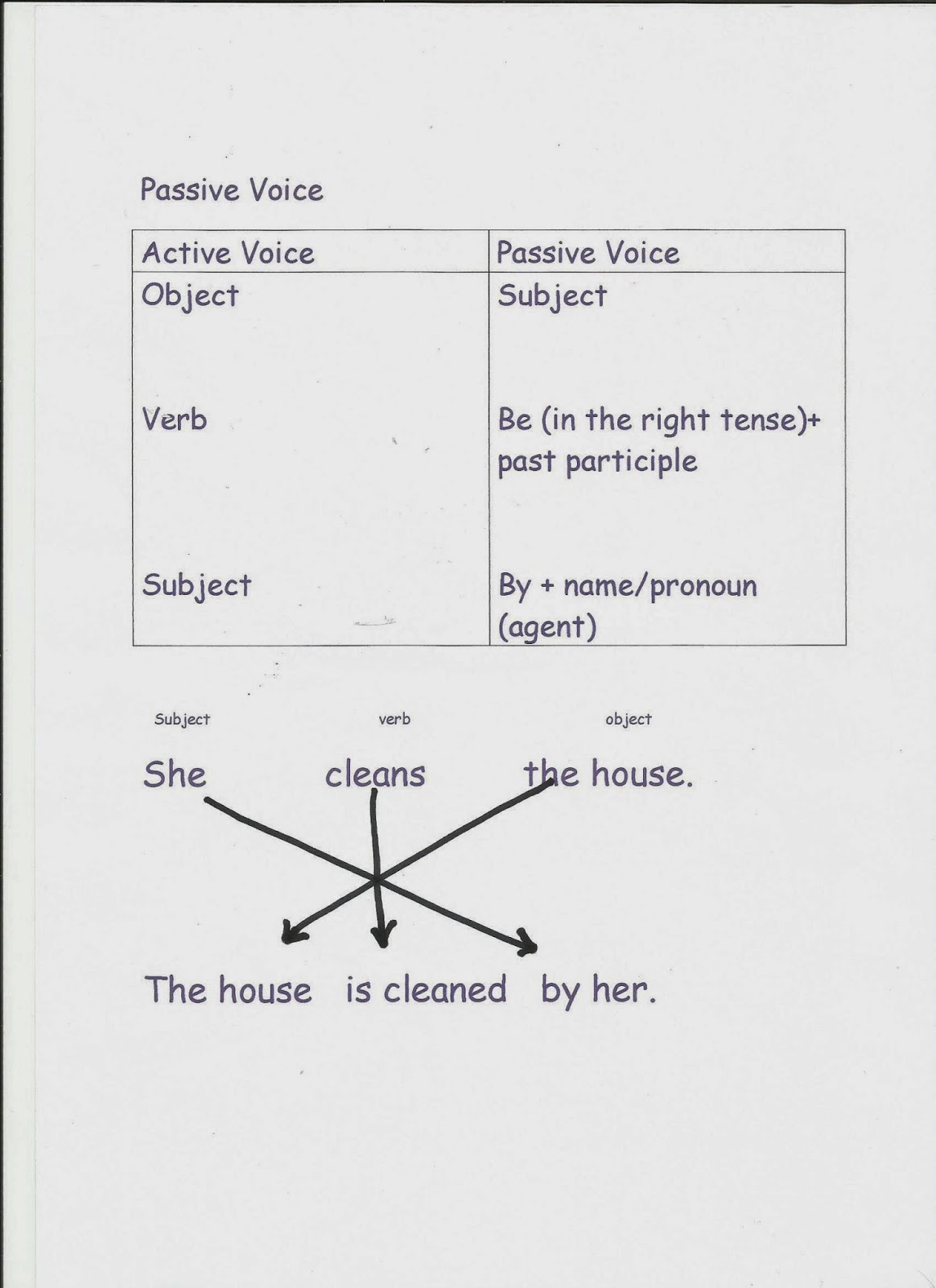
  • Passive Voice

This is what my board and my notes look like when I am presenting ‘rules’. Of course presenting the ‘rules’ does not mean that they will actually learn the language. It may though give them an understanding of some grammatical phenomena. Does this presentation work with all learners? Nope. Some like it, others don’t. So, then I start drawing or use another way to present grammar.

So,
[(context + discovery methods) = introduction of a new point + my math presentation = grammar] + practice and production = new language
or something like that….. Remember, at the end of the day, I teach English not math : ) Coming up…. teaching syntax like math! Feel free to leave a comment in the comments section.
This post has been shortlisted for this month’s Teaching English via British Council blog award. If you like it, go here and press ‘like’ on my post. Thanks for reading : D

You can download everything, here.
Adjective Order.docx
http://viewer.docstoc.com/

var docstoc_docid=’171658147′; var docstoc_title=’Adjective Order.docx’; var docstoc_urltitle=’Adjective Order.docx’; Till next time…………

EAP resources

                                My Top (online) EAP resources

After writing my EAP course overview post, I thought to myself, “why not write about my go to EAP websites?” So, here are a few of the websites I use when I teach my English for academic purposes classes. If you have never taught EAP before, I think these links are a great starting point. If you have, still read this post cause you may find something you haven’t used (you can also add your own choices in the comments section).
Spoiler alert: not all the websites are focused on academic English, I do mention how I use them in an eap-ish way, though. So, here goes!

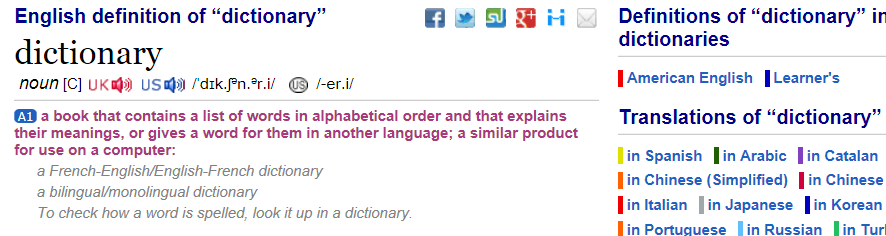
  • The Cambridge Online Dictionary
It is an online dictionary of course! What I like about it is that you can press the little speaker buttons (on the webpage) and hear the AmE and BE pronunciation of the word you are looking for. 
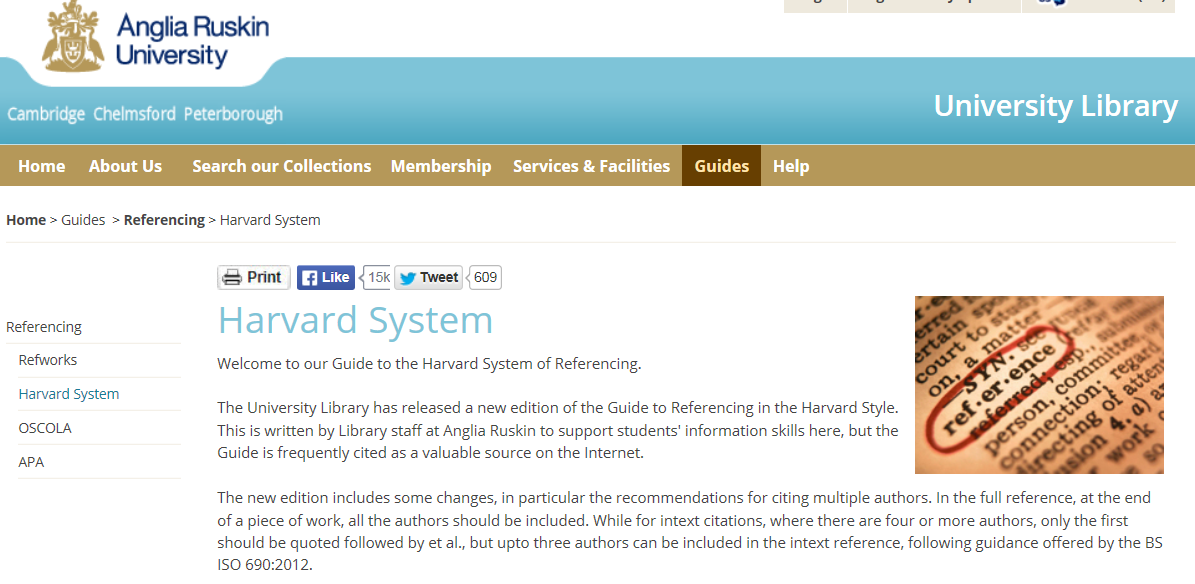
  • Anglia Ruskin University Library (Harvard referencing)
I like this site because if the reference system you are using is the Harvard referencing system, then you can find clear examples and great guidance of in-text citations and how to write the reference list as well.
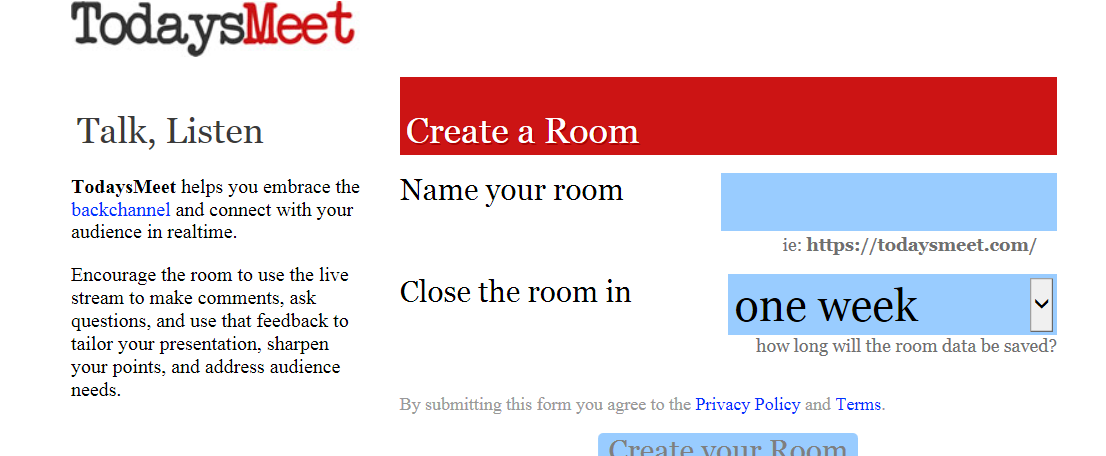
  • todaysmeet
You can use this site to hold short discussions with your learners. Use it like a discussion board (especially when blackboard’s discussion board is down during the summer). It is similar to twitter as there is a characters limit. It is great for starting threads. Just go ahead and create a room and share the link with your students!
  • Ted talks/Ted-Ed
There are many talks from subject specialists which you can watch in class with your students as part of a listening or presentations skills class. There are many videos to choose from. Two of my favourites: Jamie Oliver’s award talk on obesity and Amy Cuddy’s talk ” your body language shapes who you are”. You can also go to TED-Ed and create a lesson!
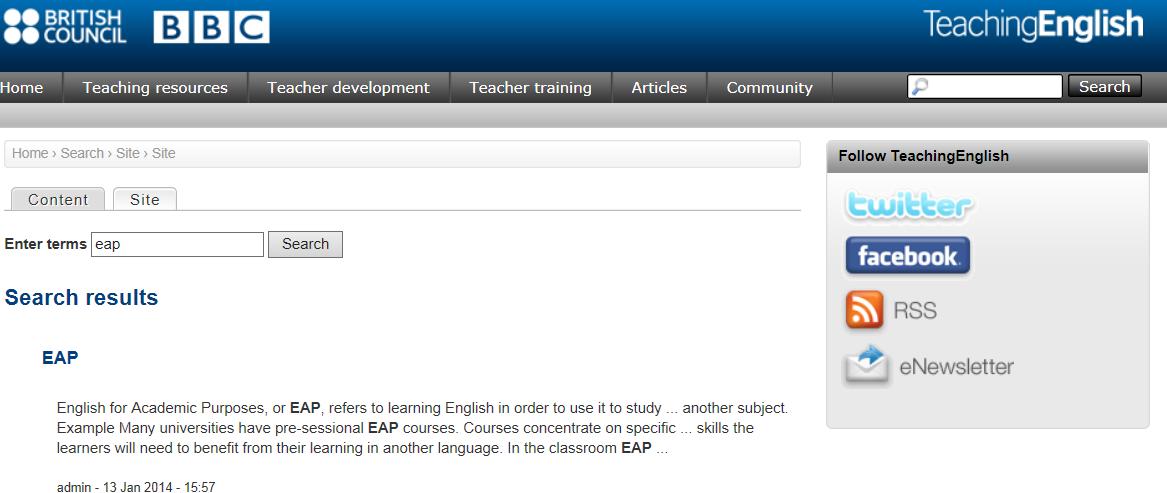
  • British Council BBC
You have probably visited this site many times. Press EAP in the search tab and you will find many interesting links. You can get many ideas from this website about how to teach EAP, discussions about EAP and lesson ideas.
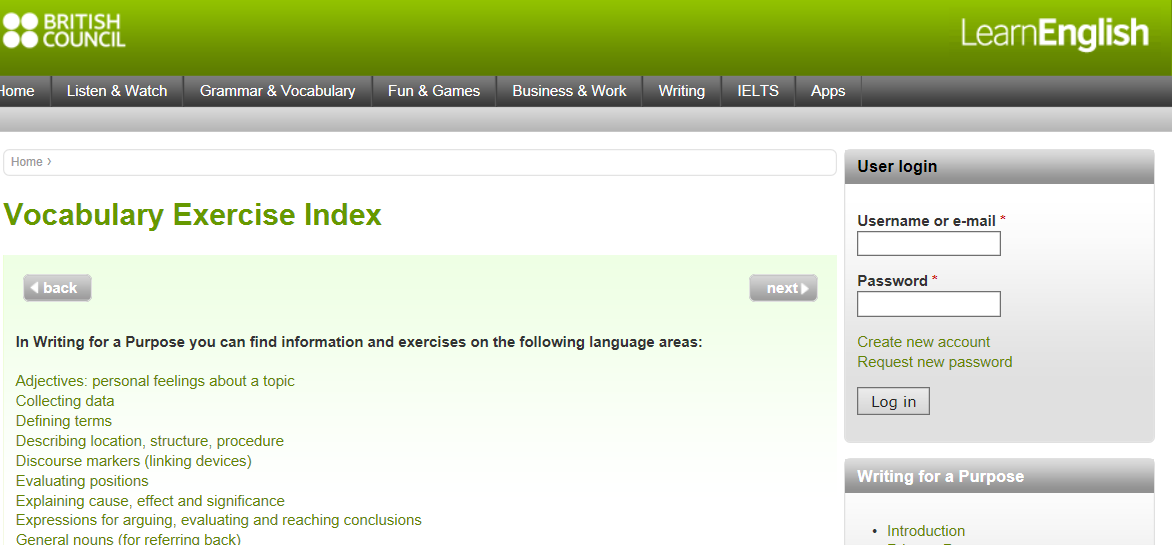
  • British Council-Learn English
Here you can find the Writing for a purpose resource with lots of information on how to write assignments, exercises and examples of assignments (there are many different types of genres to choose from so it is great no matter what field your students are in). There are lots of tabs to choose from, and the information is very clear for us teachers and for our students as well ( they can look at this at home or in class)! Very well organised and easy to click through and find what you are looking for.
  • turnitinuk
This is the software you can use to check your students’ writing for plagiarism. You just need to create an account and submit the papers. After a while, you get the plagiarism results as well as the initial source of what was plagiarised. 
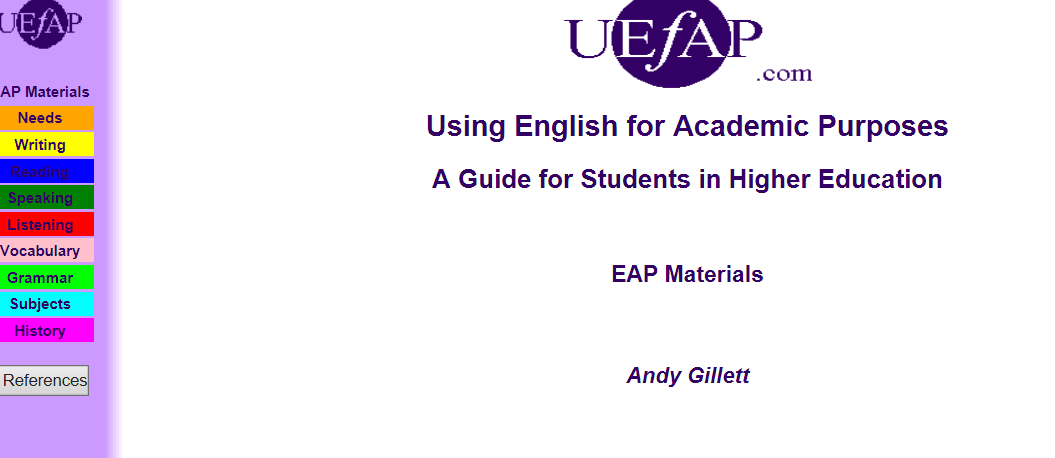
So, if you have heard of the Academic Word List, then this is a go to website. You can find the AWL (a list of words that researchers have concluded appear very frequently in academic texts) here. There are also tabs that focus on all the skills. You can either do some of the tasks with your students if you print them out or you can send them to this site as part of a self study task. Tell your students to press the materials tab and get down to work : ).
This is where you students can upload their presentation and record themselves speaking while changing their own PowerPoint slides. They then send the presentation to your email account and you can listen to them talk whilst also looking at their PPT. You need to press the home tab, sign up for free and then you start. Registering can be quite tricky but do try it out. My students loved using it.
  • Academic writing-Routledge website
If you have taught academic writing, you probably know Academic Writing: A Handbook for International students by Stephen Bailey. I often use material from this book especially for my lower level students. This book has a webpage and on this website you can find the answer key to the exercises of this book. There are also tabs with extra material, quizzes etc. Have a look at the plagiarism quiz tab!
  • Dvolver moviemaker
Your learners can create movies and send them to you. You may wonder what the connection to EAP is, though. Well, I use this as part of my seminar skills class. Very frequently, I suggest/teach expressions my students can use when holding discussions, negotiating etc. I then tell them to send me little movies with these expressions in them. So, apart from practicing during a speaking task in class, they also get to write them down and make their own dialogues whilst having fun!
  • One Stop English
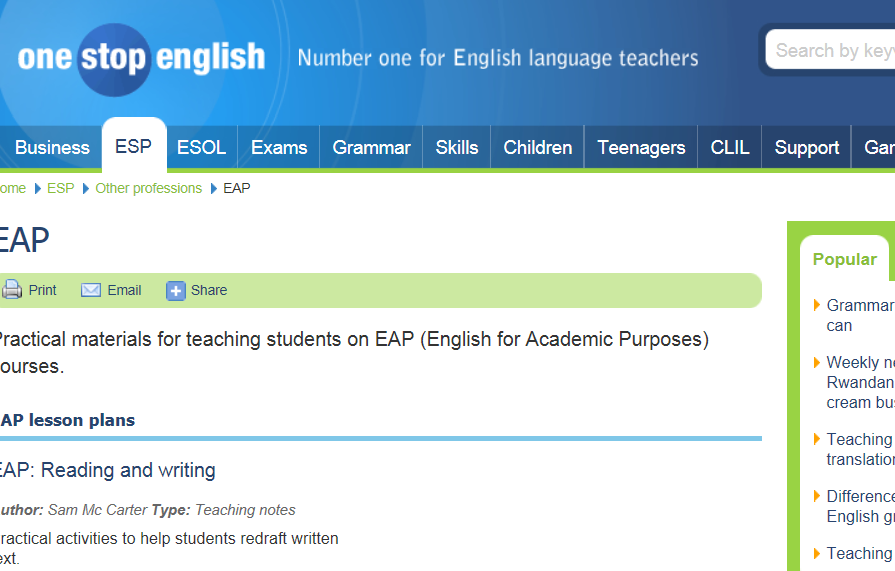
You all probably know this website! There is an ESP tab and lots of material, some free, others you have to sign in for. Teaching tip: find the pdf file adopt Ivan. It is a great file to use when teaching seminar skills!
I hope you enjoyed this post. I know that there are many websites out there that you can use. I will be back with more suggestions in the near future. I look forward to reading any of your suggestions!: D
Till next time

Ideas on where to look for material when teaching BE online

Ideas for material for my BE classes…. my favourite stuff : D

I teach business English online for some time now, so I thought it was about time I wrote a blog post about where I look for my material. These suggestions are geared towards boosting the speaking skill. I will not talk about material available in print, my focus is on material I access online. The websites that I use are open and offer their material for free. I am not going to give you any lesson plans but I do have some VERY simple warmer tasks/ideas and some ideas for follow up activities.
One of the benefits of teaching online is that it is easy to go from one page to another as you can send different links to your learner based on his needs and by just pressing a button! So, here goes! I hope you enjoy going from one website to the other!

Material for open/conversational sessions

Very often I have lessons that are more laid back and engage my students in conversations about their interests or kinda work-related issues. Since my learners are attending business English sessions, I do try to use material that is more business English friendly. So, where do I go to look for articles and what are some of my favorite articles?
                          Articles/reading material
I think the language is easy to understand and I like the business tab. Some of my favourite articles from here: 
Change offices from sitting to standing: http://www.bbc.com/news/magazine-26937454
Warm up questions: What do you think about standing up while working instead of sitting down? Do you have stand up desks in your office? What are the benefits of having them in your office?
Follow up task: Send a memo to your colleagues informing them that your company has decided to order stand up desks. Mention why the company has reached this decision (use information from the article) and briefly describe the stand up desks.
Nap pods at work: http://www.bbc.com/capital/story/20140108-daydream-believers
Warm up questions: What kind of facilities would you like your company to offer its employees in terms of well-being? What do you think a nap pod is?
Jobs for smart but lazy people (this one causes quite a stir). http://www.bbc.com/capital/story/20140228-jobs-for-the-smart-but-lazy
Warmer; Start with this quote which appears at the end of the article.
 “I will always choose a lazy person to do a difficult job, because he will find an easy way to do it’.”
The Guardian:
Top ten satisfying jobs: http://www.theguardian.com/commentisfree/2014/mar/21/top-10-most-satisfying-jobs
Warmer: Get your learners to list the top three most satisfying jobs/top three factors that make a job satisfying. If you are having a one to one session, get your learner to make this list and you, the teacher, make one too. Once the lists are ready, have a short debate about satisfying jobs and what makes a job a good one or not. Then read the article and… do whatever you want to with what’s in it : ).
Work from home: http://www.theguardian.com/small-business-network/2014/apr/24/how-to-lead-workforce-works-from-home
Warmer: Tell your learner he is the manager of a company that has decided to get its workers to work from home. How would he/she set this up? What are some of the difficulties and what are the benefits of such an idea?
Follow up: get your learner to make a PPT presentation introducing the idea of working from home and the steps that need to be taken for this to work.
Speaking about non job related issues
Good spinoff for book conversations:
http://en.wikipedia.org/wiki/List_of_best-selling_books
Even if you do not want to use this with your learners, do have a look at the top 5. Have you read them?
and something about health and well being:
I like this article because it gives ten tips on how to boost your metabolisms and you can get your learners to summarise the paragraphs into bullet points whilst also telling you if they follow these tips or not.
Of course,there are loads of other websites where you can find interesting articles like Forbes, The Wall Street Journal and so on, but most of the time I use the Guardian and the BBC. There is also a cool (am I allowed to say cool, now that I am writing a materials blog post?!? Sure!) site called newsmap http://newsmap.jp/. This site is updated regularly and you can send your learners the link and then a big collage of news from around the world appears and they can choose the article they want to read.
                                                                                                      Screen shot of newsmap

                                       Videos

Everybody knows Youtube of course. this is the place to go to for free videos. One of my favourites is this documentary. It is one hour long, so I suggest you tell your learners to watch it as homework (WHAT? Homework?). The video is quite surprising for my German and French learners and it does generate a lot of discussion about internships, inequality in education etc. It is also a great way to start a discussion about different cultures and the job scene. I have prepared a simple lesson plan for this video (I will upload it in a blog post in the near future …… hopefully).
Who gets the best job? http://www.youtube.com/watch?v=6bD7U8kqI8A

Another website with loads of videos which can be used with your BE students is The Australia Network http://australianetwork.com/businessenglish/ . You need some time cause there are many videos connected to conducting meetings, business socials/small talk etc. Click the tab The Business of English and watch the videos with your learners.

That’s all for now. I do know that there are loads of articles/videos you can use with your learners but I wanted to share the ones I use. Apologies if the links do not work where you are but hopefully by knowing where I got the article from and what it is a bout you will be able to find it… or not!

Till next time…..

Wacky teaching ideas

Wacky ideas: Success stories and flops!

As  teacher, I very often try to keep my students interested in the lessons by trying out weird but lovely ideas. The thing is that sometimes the weird ideas that pop into my head, turn out to be a great lesson but other times, well, they turn out to be a flop : p.

Wacky idea No.1
I had started teaching in the public sector. I had been assigned to a primary school in a village. My students were a group of ten 8 year olds so I thought,” What can I do to keep them interested? Love English?” I decided I would play a song. “Heads, shoulders, knees and toes” was the song I chose. I got them to repeat the body parts, they also showed me where their head, their shoulders etc were and then I played the song. We did the song’s moves and everything was going smoothly. They loved it. So, I had the brilliant idea to play it again. They were having a great time, weren’t they? I said to my students, ” Ok, since we all had fun, let’s do it again!” Then an eight year old boy stands up and in a heavy Cretan accent says,” No, we don’t want to do this again! Now, we want to do tsalimakia!Sirto!” and he started dancing and clapping. It took me ages to get him to stop dancing and go back to his seat and back to business. For all my non Greek readers, please press the link to see what he started dancing. Pay attention to the lead dancer and imagine a 8 year old trying this!

https://www.youtube.com/watch?v=zACulAjHPwI

Wacky idea No.2
Authentic materials,,, I love using them. Back in the days, when MP3s were non existent (I know, I am quite old) I decided it was about time I used songs my students liked, in class. I asked them to bring in their favourite songs. We were going to do some listening based on the songs they chose. I ended up with ten CDs, bits of papers with scribbles on them and a big headache! I did not know where to begin?!? I had no track number, no song titles and no, no , no! I ended up (I am ashamed to admit this) losing some of the bits of paper and I never realized this oh, so brilliant idea. Next time round, I need to plan this better. Get them to bring in the single on their MP3 players, know the artist’s name and the title of the song. Then, I make a big file with everything and do some cool listening activities with music.

Wacky idea No.3
Adult learners and haribo gummy bears…. is that a Do or a Don’t?After being on the 7th week of an intensive pre sessional EAP course, and in the middle of drafting and redrafting a research paper, my students started to be a bit less motivated. They were mostly sleep deprived and without much energy (if you have taught on these courses, you will know what I am talking about).  Before I move on, I should let you know that during EAP courses I do tend to walk around with Haribo gummy bears  in my bag just to get a boost. So one day I said, ” I know you are all tired, but let’s do this, and then I will give you some Haribos” Most of my students were from China and did not know what a Haribo gummy bear was so that kinda added some extra incentive. Once we had finished, I passed around the bag of Haribo and they munched away happily. The next day, we were going through the material as normal, and then one of my students goes, ” So Joanna… no candy today?” I ended up being one of Haribo’s best customers in those final weeks.

                                        Picture credits: http://et.wikipedia.org/wiki/Pilt:Packets_of_haribo.JPG

Wacky idea No.4 
Story telling and adult Business English students. Normally, when you teach business English students, your lessons have do with negotiating, email writing, telephoning and so on. I thought that when business people socialise, they do tend to talk about their lives and even tell stories.This gave me the green light to do a story telling lesson with some of my learners. I think that it is a good idea when your adult learner likes role playing, likes telling stories or is doing something that is creative. If they are not in any of the categories I described, then this can turn into a disaster especially when your learner does not want to use their imagination and is always asking you “So is this right? Am I close to the story?” ” So, the father was sick? “

Wacky Idea No. 5
It is carnival season. Wherever you look there is a mask, feathers, a costume! I always wear something festive and try to be in the carnival mood and every single year I say, ” Never again!” Seriously! Why do I do this? This year, I had the brilliant idea of wearing big tinted glasses and a hat with pom poms hanging off it. It is so hard to teach in those. So, yes, my lesson was planned, my materials were ready, we were going to talk about costumes and carnival. The only thing I had not included in the anticipated problems section of my lesson plan was flying pom poms. So, of course my lesson was more on the “Haha! Miss you look funny” side and not that much about grammar and vocabulary. Lesson to be learnt. ….next time I want to dress up… I won’t!

Picture taken from: http://www.iidudu.com/chic-crafty-pom-poms-for-party-and-home-decorating/cute-diy-pom-poms-with-striking-colors-for-cheerful-decoration/

Final thoughts
I like trying out new things. I think that sometimes I get caught up in the enthusiasm of something new, and my planning skills go down the drain. Some of my best lessons have been a result of trying out something new, something out of the ordinary. So, go ahead, plan a nutty lesson (emphasis on plan).

I enjoyed writing this post and I hope you liked reading it. Please do share some of the unusual stuff you have tried out in class. I would really like to hear some of your stories.

Till next time….