I know I shouldn’t…. but I am.

I do not talk about politics. Eva. This is an ELT blog and I talk about teaching. I wanted to post my easy breezy #monthlyfavorites post today. Talk about what is good in the world of teaching and add my girlie stuff and live on my pink little cloud, but I cannot. I am sad and disappointed. I want someone to show that they care. Someone to take a stand and do something. This has nothing to do with a Yes or a No..My vote is for a solution.

I am Greek and I am a European. Don’t let me drown.

chairs

Teaching Business English Online: some challenges and many suggestions

This post is an article I wrote and it was originally published in Business Issues, the IATEFL BESIG Newsletter, Summer 2015, Issue 90, and is reproduced with the kind permission of the Editor, Chris Stanzer.

In today’s post you will find information about some of the challenges  and suggested solutions of teaching online (Business English).

What do I mean by online teaching?

You can teach Business English online almost the same way you do it face to face. The only difference is the online part. You need a platform to use as a classroom (Adobe, Wiziq or even Skype can be used as an online classroom). You also need a learner’s management system, which is a site you will use to upload lesson notes, recordings and anything else you want with your students. Once you have students, you are now set to teach online.

Challenges

Online teaching has a lot of advantages but I am not going to talk about those, here. Here you will find some of the factors that can make online teaching of Business English a bit challenging. I will make some suggestions on how to make these challenges…. less challenging.

  • Connection problems and back up plans

The internet is the medium you use to connect with your learner. You or your learner may have difficulty connecting to the net or the learning platform. This is why it is necessary to have very fast internet connection. You also need back up plans in case something goes wrong with the connection. You could use a phone line when your internet is not working and Skype when your online classroom is not responding. It is also a good idea to get your learner’s contact information on different types of media (phone, mobile, emails).  Time is of the essence for your BE students, so you really need to eliminate or at least try to minimize any connectivity problems that may waste your learners time. Your learners are at work and dealing with connectivity issues may even make them want to cancel sessions. You do not want your learners cancelling sessions, especially when their schedule is already tight!

  • Problems accessing the virtual classroom + technology related problems

There are a lot of tech-related things that may go wrong during online teaching. The audio may not work, the webcam may not be responding, your learner may not be able to use the writing tools in the online classroom. For these reasons creating a go to document or a podcast regarding the tech glitches connected to the software you are using to hold the sessions is essential.   You should also take a picture of the virtual classroom and add notes (see picture below).

22be5-swsto

                    Example of document with guidance for learners (Picture of Adobe Connect)
  • Recording sessions

One of the advantages of teaching online is that you can record the session and upload it to your chosen learning management system (LMS) or send it to the learner. This is a great function, but you also need to be careful, and always ask your learner for permission to record and upload the sessions because there may be legal issues or your learner may not want to be recorded.

  • Time management

Managing time online can be quite difficult especially when there are connection problems. During an online session the phone line may drop or your learner might vanish from the online classroom. You will probably spend minutes trying to get connectivity back and time will fly without you noticing. In fact, you are more focused on checking to see if you or your learner is back online, instead of what time it is. This can affect your time management and consequently the whole lesson. In this case, always keep in mind that connection problems occur, and checking the time is something that has to be done consciously and frequently.

  • Passiveness

Many people say that online teaching is not like face to face teaching, and it isn’t. The truth is that your learners can be a bit more passive if you are not careful. According to Pelz’s principles of effective online teaching (2004, cited in the Hannover research council, 2009) visibility is essential, as lack of visibility may lead to passiveness on behalf of the learner. This is why it is important that the sessions are carried out whilst using a webcam. Teachers should also always have their webcam on so that the learners see the teachers face, gestures etc. That way the teacher is not just a voice coming from far away but someone the learner can see! Getting your learner to use a webcam is also important. Webcams are necessary when delivering BE sessions because business communication does require the teaching of paralinguistic features and this is when a camera can be useful. You can show your learner what gestures and facial expressions are appropriate/inappropriate/not so appropriate in different cultures etc.

  • Distractions

Distractions exist online and offline, but during online sessions they may take over your lesson.  Apart from your online classroom, your learner is also connected to his email account, Skype or an internal communication system. So, you may be teaching negotiation skills, and your learner may be emailing a colleague about a meeting! What can you do in this case? Well, try to explain to your learner that the English session is very important and that being preoccupied with something else during the session, may lead to missing out something important!  You could also incorporate the distractions into your session (if you realize your learner is doing something else instead of paying attention to the lesson),  and they could be a great  learning experience for your BE student as you may help him/her with a real email he/she may need to send.

Online teaching is here to stay. If you know what may go wrong beforehand, plan ahead, and are prepared, everything will go smoothly, and online BE teaching will be a piece of cake!

References

Hannover Research council (2009) Best Practices in Online Teaching. [pdf]: Washington. Available at <http://www.uwec.edu/AcadAff/resources/edtech/upload/Best-Practices-in-Online-Teaching-Strategies-Membership.pdf>  [Accessed 27 February 2014].

Till next time…….

We need to talk…….. about blogging

When I started blogging, I didn’t really know what I was getting myself into. I started off because my Delta tutor, Marisa,  suggested it as a good way to reflect. So, my first blog posts were about the things I tried out and ideas for tasks. During my first year of blogging I didn’t really blog much (compared to now I mean) and I wasn’t really that active in social media either. Now, two and a half years later, I know a few more things and that’s what I am going to share today.

Firstly

If you are going to blog and want people to read your blog posts, you also need to promote your work. I mean, yeah sure, your blog may be you reflecting on your work, class experience, writing about tasks so you don’t forget them and so on, but you are also blogging because you want people to read you (aren’t you?). You want to share your ideas and learn from others through their comments. If you wanted your blog to be private, then why have it at all? Why not just write in  notebook, like back in the good old days when we only had notebooks?

So, once you have written something and pressed the publish button, what next? Well, you share/promote.

Where?

Facebook for starters. I share all my rambles on Facebook (luckily, Facebook doesn’t disown you if you are a prolific blogger like me  :p). Apart from your personal page, you can also share your posts on Facebook group pages. I share mine on two.

Blog posts of Teachers

Blogging in ELT

You can also add hash tags on your Facebook entries because they do show up if someone searches for something you have has tagged (and anyway, urban legend says hash tags are good, so just add’em , will ya?). The TeachingEnglish- British Council also very often publishes teachers’ blog posts.

Google+

I also share my post by pressing Google+. If I am a member of a Google group and my post will probably interest the people in that group, then I share in that particular group. I am a member of the #Tleap group, so sometimes when I write something about EAP, I share my post with the group.

LinkedIn

This platform often “falls off my radar” cause well, people do not really share their blog posts there. I have posted a blog post from time to time as part of a discussion, but I don’t really share stuff on LinkedIn. You should know though that WordPress allows you to automatically publish your posts on your own LinkedIn profile page once they are out.

Twitter

I must admit this is my go to place to share my posts. First of all, I tweet my posts for a few days. Not just once. The life span of a tweet is not that long. I mean your followers will only see it for a few minutes and then it’s lost in the abyss.

Building with grass

A few more thoughts about blogging

I think it’s necessary to always thank people who share or retweet your posts. It’s nice of them to be sharing, and you should be saying thanks. I also think that if you read something and think it’s good, you, too, should be retweeting and sharing their posts as well.

I reply to comments.  I ❤ comments. I enjoy reading them. If someone is going to write something in response to a post they read on my blog, I find the time to reply. I may not do it the same day, but I really try to reply to everyone. Also, comments give me a sense of who reads my posts and what the people reading my posts are interested in.

Blogger vs. WordPress

I started off on Blogger but after almost two years of blogging on Blogger, I moved to WordPress. The move is easy. The bad thing is that you lose all the nice comments and documents and PPTs you shared on Blogger do not get transferred and there is a bit of a formatting issue. I like the widgets on WordPress and how easy it is to embed things. I do miss the font options Blogger had.

candy

Inspiration

I like blogging about the things I am interested in, so I share tasks I like, good and bad teaching moments and of course any other wacky idea that comes to my mind (:p). I have also found that I often tend to be borderline personal, but I am OK with that cause I like approaching blogging as if it is diary or journal writing. Articles or other blog posts also inspire me. This is why I also enjoy taking part in blog challenges and chains. It makes me feel like I am part of a community. YouTubers are also a place where I get ideas.  The #youngerteacherself and my most recent #monthlyfavourites posts have come from/been inspired by YouTube!! I ❤ YouTube. Finally, some of my posts are more lifestyle-ish cause, hey, I am a woman and I do like me my girlie stuff.

Photos

I now take my own. I know ELTpics is also a great website where you can find pics. I haven’t got myself round to doing that yet.

Final thoughts….

Blogging is a commitment. It takes time. I also think it walks hand in hand with social media.

2015-05-10 15.17.41

#thegirliesideofELT: My FUN Planner

So, if you ❤ planning and are kinda girlie continue reading. If you are not, stop reading!!! Once again, I am posting a #girliesideofelt post 7. These are my easy breezy posts. The ones you should be reading whilst having some Rose wine or a nice cup of coffee (or tea).

So, planning. I like planners (I am a Capricorn, so of course I am going to  luv  planning). This post will show you what my planner looks like and will give you some tips on how to ‘girlie’ plan your work and life, like me.

Spoiler alert: I am also going to tell you how to make stickers and where to look for planner stickers.

How I go about planning

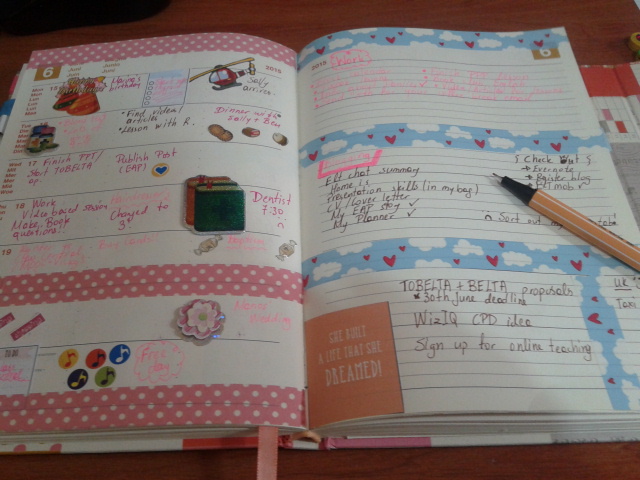
Well every weekend, usually in the morning, I pour myself a cup of coffee, turn on my pc, go to YouTube and put on my favourite tunes. I then take out my planner. I have two. A boring one where I write down details about my online sessions ( timetables and mini lesson plans) and a fun one, where I write about what I have to do during the week + work. Thankfully enough, according to my planner, the fun one, I am not a workaholic, cause I actually do have a life and I do do other things as well (well, at least I plan to do them!).

What do I write in my planner?

There are two pages. On one page I write down what I have to do every day: that is appointments, important work stuff, dinner/party plans. The lots.

The other page is where I write down things I have to do for work for example, look for videos and articles for my next sessions or tweak some lesson notes. I also write down my blogging ideas cause, well, I blog a lot, and I have a lot of ideas in my pretty little head, so I write all my ideas in my planner.

My planner

My planner

Do I do everything that I have written in my planner?

Not always, especially my blogging or extra curricular stuff. That’s why I transfer things from one week to the other. That way I can keep track of the things I want to do, but didn’t manage to.

Technical details…. decorating

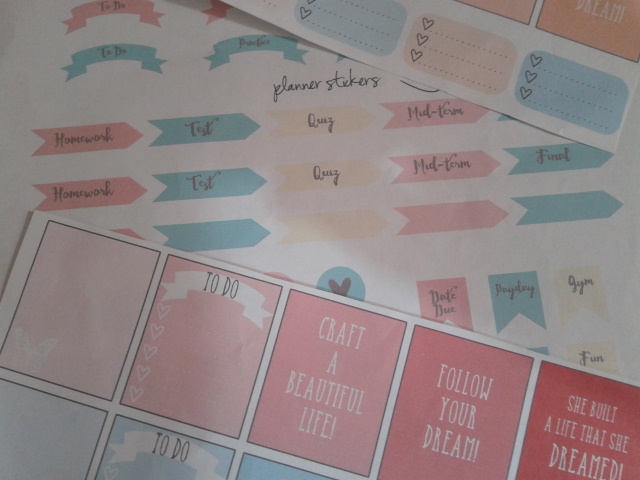
Com’on! As if I wasn’t going to talk about stickers and washi tape? I decorate my planner. I have bought different colour washi tape to separate the sections in my planner. I also have post-it notes for things I want to move around. I sometimes use post-it notes for my shopping list and then stick it in my purse, so I don’t forget what I need to buy. I use stickers to mark doctor’s appointments, birthdays and fun going out stuff. I also made my own planner stickers. There are loads of websites you can go to and print your own stickers.

washi tape

What do I need for DIY stickers

Not much. You need to buy full sheet white matt sticker paper. Make sure the quality is good. Check to see that you can actually get the sticker off cause I couldn’t and I ended wasting a few A4 sheets. Find the stickers you want to make and then print them using your home printer. It’s a piece of cake!!

DIY planner stickers

Why this way?

  1. It’s fun and relaxing.
  2. It’s like meditating and planning. Soothing.
  3. You actually end up doing more things when you write them down.
  4.  It’s cute.

Instead of stressing over things, by putting them down in my planner and decorating, it makes me “think” that the week that follows will be a good week. By writing everything down I also have a clear picture of the things I want to do, and actually have seen that I do end up doing most of them. And anyways, decorating is pretty, and I like pretty shiny stuff. FYI: just so you know,  my planner ends up actually being a planner/scrapbook/journal.

Useful links for DIY stickers

Vintage Glams Studio

Shopping list

Do I need to plan this way? Nope. Do I enjoy it? Yeap.

If you are really ‘into’ planning, you may want to have a look at the Erin Condren life planners. They look really nice.

That’s all folks. Talk soon xxx

EAP Stories

Inspired by the Teaching EAP blog post discussing the requirements of teaching English for Academic Purposes, I realized that many teachers who teach EAP come from different backgrounds and have different teaching experiences.  When you look at job ads for EAP posts, you very often see that universities look for teachers with an MA in TESOL or Applied linguistics, a Diploma, experience teaching Ielts, sometimes they are interested in publications and so on. Today’s post will give you teacher stories. I asked EAP teachers from around the world to tell me their stories about how they got into EAP and the requirements they had to fulfill. I would like to thank each and every one of them for sharing their stories. So, here are their stories.

Deirdre McKenna-EAP Lecturer at Arts University Bournemouth

I first started teaching English in 2003 with young learners in a Hagwon in South Korea. At 22 years old, I was armed only with my degree in Psychology, a sense of adventure, and no clue about classroom management, lesson planning or teaching methodology. After that year I thought ‘never again’, and had no intentions of becoming a teacher. After a few more travelling adventures, the reality of paying the bills set in, and I decided to give English teaching another go and headed back to Korea in 2006. This time I got a job for a government run ‘English Village’, working with high school students. As well as teaching, I had opportunities to work on developing lessons, materials and workbooks, which I thoroughly enjoyed. Gradually, I started to feel like teaching was something I was good at, and I suppose I learned on the job, and by observing more experienced colleagues. I stayed there for 3.5 years, and at that stage moved on to do my CELTA. Looking back, it seems like a very back-to-front way of doing things, but it happened that way as I had never planned on teaching English long-term.

 Getting an A grade in my CELTA course in 2009 boosted my confidence, and I then moved into teaching adults, with business English in Germany for 2 years. During that time, I also tutored a couple of university students, which I really enjoyed. I then did my Trinity TESOL diploma in 2011, and began thinking about how to diversify as a teacher by moving into EAP, seeing as I had experience with both YLs and adults. My first opportunity to get into EAP was through a 10 week pre-sessional with Newcastle University (INTO) in the summer of 2012. Working with university students just felt like the best fit to my teaching style, and I decided to pursue a career in this area. After my experience with Newcastle, I started my MA in Applied Linguistics and TESOL, and began applying for more EAP posts. It was a real struggle to find anything suitable, and I spent about a year applying for jobs and teaching business English part-time. A full time EAP tutor post came up with the University of Nottingham, Ningbo, China (UNNC), and I joined the department in March 2013. Although I hadn’t really wanted to go to China, I hoped that this job would provide me with the experience to get my foot in the door in the UK. During my time there, I had the opportunity to teach on a range of courses, and became the Strand Leader for the ESAP for Architecture component, which involved curriculum planning and materials development. I absolutely loved working there, especially being surrounded by experienced EAP professionals. After almost two years with UNNC, I was hoping to move closer to my home in Ireland and began applying for jobs in the UK. I successfully interviewed for the EAP Lecturer post with the Arts University Bournemouth, and moved in January 2015 to begin my new role. I think they were particularly interested in the curriculum design work I had done for UNNC as my current role involves similar aspects. I have now almost completed my MA and I am looking forward to continuing on my EAP path.

 Vedrana Vojkovic Estatiev Online Tutor at the University of Zagreb (Croatia)

EAP – a course officially called Academic Writing at the institution where I work – is compulsory for undergrads in their first semester of university. I first taught the course at the University of Zagreb in 2008. It was entirely unplanned; as I recall they had an extra group of students they needed an instructor for, and a colleague asked if I was interested. I was given a copy of R. R. Jordan’s Academic Writing Course, and got on with things as best I could. I think everyone initially assumed it would only be for a semester, so there was no talk of qualifications or requirements, although I seriously doubt I would have been asked to teach if I hadn’t had teaching experience with adult learners and a degree in English literature. When it eventually transpired that I would stay on, I had to qualify as a lecturer. There was a list of requirements, including a minimum number of teaching hours at a higher education institution (which had luckily added up by then), as well as a certain number of publications and/or translations. I also had to teach a demo class. At that point I hadn’t taught one for seven years, so I was really stressed! Happily, everything went well.

You can also read Vedrana’s blogs here

 Clare Fielder English Language Lecturer within the Dept. of English Studies at Trier University (Germany)

I would say that, at least in Germany, universities seeking to employ new teachers are in general more interested in the qualifications you hold than some other language teaching institutions might be. I have the impression that some universities are moving towards requiring a PhD (or equivalent) from new teaching staff, which I think is unreasonable, especially for less theoretical subjects like teaching languages. I teach ESAP; English for Literary Studies and Linguistics, to be precise, and am employed as an English Language Lecturer within the Dept. of English Studies. I worked previously at language schools and secondary schools in the UK and Germany, so moving to working at a university was when I suppose I became an EAP teacher – though I didn’t think of it in those terms at the time! I just saw it as teaching English, but to a group of people with a different set of needs from my business English or summer school learners! To get my job, I had to be a native speaker of English, hold an MA (or equivalent) in a relevant subject area (i.e. languages, literature, translation, etc.) and hold a teaching qualification from an internationally recognized institution (i.e. they checked whether it was just a 2-week online course, or whether it included sufficient teaching practice). Relevant teaching experience (i.e. to adults, advanced levels) was also a bonus. I think the qualifications required of me were appropriate.  I would say that both my MA and my Dip TESOL help me to do my job well; one because it allowed me to gain insight into academic work and conventions in this field, and the other because it encouraged me to think about the best pedagogical practices for my teaching context. I can see that a PhD would also do the former, but I’m not convinced it would do the latter.

Clare’s blog posts can be found here

Anastasios Asimakopoulos English language tutor in the ELTC, University of Sheffield

I guess I was ‘initiated’ into EAP as a master’s student. Doing a pre-sessional EAP at the time didn’t even cross my mind as I had met the language requirements for admission to university. So, I remember going through the marking scheme in the student handbook, trying to figure out what all those criteria meant. I think it was a workshop I attended that sort of helped me get my head around academic writing. It was a one-off session on critical thinking, and there were lots of students from various courses, not just TESOL. The next thing I remember was buying the book Critical Reading and Writing for Postgraduates, which I read from cover to cover before starting writing my first assignment. The rest is just history: I got sucked into hedging, paraphrasing, summarizing, synthesizing, cross-referencing, blah, blah, blah. I became so interested in academic writing that by the time I was finishing my master’s I was only applying for EAP jobs. I have a BA in English Language and Literature, an MSc in TESOL and a CELTA.

Gemma Lunn Pre- sessional EAP tutor at the University of Reading (UK)

How I got into EAP?

My teaching career started at Oxford House in Barcelona in 2008. Over the following 5 years I taught a range of abilities, class types and age groups in Barcelona, England and then South Korea. I was teaching in a middle school in South Korea and for various reasons was keen to move into a university environment. I enjoyed teaching young teens and the job was great fun but after two years it wasn’t providing the right challenges for me. I applied for University jobs in South Korea but only had one offer because I didn´t have an MA. I remember being annoyed at the time because I knew people teaching English in universities with MAs in totally unrelated subjects who had less experience and teaching qualifications than me (I had just completed the Trinity Diploma, surely I was far more qualified!) However, now I´ve done an MA I can see the value and realise why it is a must for university jobs. So realising I´d have to get an MA if I wanted to pursue the university path I decided to come back to England and do just that.

I decided to study an MA in Applied Linguistics at The University of Reading, mostly because of the excellent (and fully deserved) reputation but also handily as my parents live nearby so I could stay with them whilst studying. I absolutely loved every minute of the MA, even those at 3am when I was close to tears trying to finish an assignment! It has proven to be invaluable, both in terms of personal learning and for my career.

As well as an MA I knew I also needed some more EAP experience in order to get a permanant position in a university. Everyone had told me that summer pre-sessional courses were the best way to do this. So whilst finishing my dissertation I taught at the University of Manchester for three weeks on one of their pre-sessional courses. Even though it was a short course it turned out to be a perfect introduction as the students already had the required grades so it was more of a crash course in EAP (for me as much as for the students!) with slightly less pressure and marking than longer courses!

During that summer I was also applying for EAP roles in nearby universities and was lucky to get offers from Royal Holloway and Brighton. Both of these roles were not with the universities themselves but with companies (Study Group and Kaplan) who manage foundation and / or in-sessional courses for the universities. I think this is a good step into university teaching as getting a full time position directly with the university is not that easy. I took the position with Study Group at Royal Holloway, University of London and have just finished an academic year as an EAP Tutor there. The year was a massive learning curve, but a very enjoyable one and it was great to use all the skills and knowledge I acquired from my MA. Still, I know I have a lot more to learn which is a great position to be in. This summer I´ll be going back to the University of Reading, but as a teacher rather than a student.

 You can read Gemma’s blog posts here

Stephen Bruce EAP Coordinator at Dublin International Foundation College

In many respects, I would consider myself an EAP novice. I wouldn’t have thought so a year ago but having visited my first BALEAP conference this year, I now see many gaps in my knowledge and huge scope for me to improve. I use my blog as a way to do this; to develop my understanding of teaching, specifically in relation to teaching EAP. And from blogging and tweeting, I have met people in EAP who have spent far longer than I have thinking about what it means to teach EAP. I mention this at the outset because I feel far less comfortable referring to myself as an EAP teacher than I would, say, an ELT teacher. It seems harder to put my finger on what exactly an EAP teacher is, or does. And yet, that is my job description and here I am offering an account of how I moved from ELT to EAP.

For the first half of my teaching career, I was a general English teacher. In 2001, after finishing an MA in Philosophy, I did a 100 hour TEFL cert at the TEFL Training Institute in Dublin and subsequently took off for Italy. In 2004, I did the RELSA certificate which is the Irish equivalent of the CELTA. At this stage, most of my teaching was exam focused, especially IELTS. The fact that most of my students were heading to university via IELTS meant that the English I was teaching became more academic. In 2011, I did an M.Phil. in English Language Teaching at Trinity College Dublin. Pretty soon after finishing the M.Phil. I applied for a job as an EAP teacher. In all honesty, I hadn’t really heard too much about EAP at this point. Of the many acronyms in this industry, EAP has been slow to gain traction in Ireland.

Despite my ignorance, I’ve been working as an EAP teacher since 2012. Initially, I found it really difficult. Many of the students already had high levels of English and I worried that I wasn’t of any use to them. Others had lower levels of English and I struggled with how best to accommodate these different levels. It was only when I got stuck into what they would have to do at university and worked back from there that I felt confident that I could offer worthwhile lessons.

Still, I think the concept of what an EAP teacher is can be hard to pin down. I sometimes look enviously at the chemistry or physics teachers. God love them but they’ve a lot of content to get through but at least it is quite clear what that is. In EAP, we also have loads to get through (e.g. critical reading) but with less clear objectives (how do you know when/if they’ve got it?). As a result, there is always a nagging sense that we could be doing more and doing it better. But I suppose that was the case teaching ELT as well. I heard one talk at BALEAP, by Dr Justin Alam, which described an EAP (or ESAP) teacher as like a really good, enthusiastic student, the one in the class that others borrow notes from. I liked this. I am not an expert in Business or Science or Engineering. But I know how to learn (I think) and I know how academia works (at least I know more than my students). Seeing myself in this way helps me to avoid some of the stress I had starting out in EAP. I no longer worry that I have to be an authority on the subjects my students will go on to study. But at the same time, I have scope to take an interest, read up on these different areas and familiarise myself with the discipline and its norms. That way there is far more substance to my lessons and they are hopefully more relevant.

Stephen’s blog posts can be found here

 Ola Bakri Assistant Lecturer, Cairo (Egypt)

I taught academic English course couple of years ago. That was for grad students studying towards their Master’s degree. I truly enjoyed the course with the students because we had a good rapport. However, for them the course was easy!

The course contained the regular stuff of academic English, such as paragraph writing and punctuation etc. The course was boring to students a bit because they think they know this stuff. When I graded their writings I discovered they need this stuff, but they do not like it!

The course I would say was successful, but I would do more writing exercises and more writings. Also, I would include more of critical thinking exercises. My qualifications back then were a Master’s in Education from Sask, Canada.I think that was my first exposure to academic English. Now, am teaching academic English to undergrads in a private university in Egypt. It’s different, because we teach them the basics. So, what’s your story?

My story- Pre- sessional EAP tutor at the ELTC (University of Sheffield, UK)

Back in 2011, my friend Anna and I were discussing summer school work in the UK. You see, I live and work in Greece, but I always wanted to go to the UK to teach. Maybe because the UK reminds me a bit of my mother land Australia. Anyhow, Anna suggested that I apply for EAP jobs. I never thought I would be able to get a job teaching English at a university but I thought, ” OK! I will do it. Worst case scenario? I will get rejected.” So, I sent my CV and cover letter to universities that were hiring EAP teachers. I only applied to places that were asking for teachers who had experience in teaching  Ielts  and an MA  (I had both, as well as lots of years of teaching experience). I was so happy when Into Newcastle shortlisted me and I got an interview. Before the interview I read up a bit more on EAP and prepared for the interview. I got the job and I started teaching EAP in 2011. Ever since I have been going to the UK and working as a pre-sessional EAP tutor. Apart from Newcastle University, I worked for Bristol University and this year I will be doing my second course at the University of Sheffield. After I started working as an EAP tutor I also got my Delta. My module 3 was an EAP specialism.

I love teaching EAP because my students are adults who are preparing for their studies. I feel like I am part of their new adventure in life. I like to learn from them. My students are mostly Asian and their educational background is completely different to what I am used to. Also, EAP is fairly new for me, so it challenges me. The fact that I have taught at different universities has allowed me to see how different universities approach EAP. Induction programs for these courses have been amazing and very informative. I have learnt a lot from these different contexts, and this informs my teaching.

So, there you have all the EAP stories. Feel free to share yours in the comments section below.

Till next time…
eecc3-delta2bbooks

To use or not to use…. The PPT Debate

Read this title

Let’s ban PowerPoint in lectures – it makes students more stupid and professors more boring.

Helen shared this article on Facebook, and it created quite a buzz. You can find the article here  You can find the Facebook group here.

In a nutshell, the article says, “PowerPoint is bad. For many PPT related reasons, the students do not learn.  Lecturers are limited because of it. We banned it. We are now using chalk and the black board and students are learning better”. Yes, this is a very simplified version of the article. 

Com’on!!! This reminds me of the whole course book/no course book debate. Just fancier, cause PPT is fancy.

So, is PPT a blessing or a curse? Does it make or break your lesson? Well, if you ask me, ” PowerPoint is just a tool. PowerPoint is not the panacea for a lesson you think will probably be boring. If you know how to use it, your lessons can become more interesting, better. If you don’t, then it can actually be bad.” But as it is a tool, we should use it to enhance our lesson. But remember it’s just that. A tool. If our lesson is boring, badly planned, if we are in lecture mode throughout a lesson, we have lost our learners, no matter how good or bad the PPT is!

Is it teacher centeredness to say that a teacher/lecturer is, up to a point, responsible for the success or ‘floppiness’ of a session? It’s not PowerPoint.

PPT Ifs

if you read from slides, is it the PowerPoint’s fault or your fault, you are over relying on slides?

If your slides are full of animations flying around, too wordy, and your students are reading your slides, instead of paying attention to what you are saying, are the PowerPoint slides to blame?

If you use PowerPoint to include every single piece of information that’s in your lesson, turning the PowerPoint into your lesson,  is it the PPT’s fault?

If you haven’t shared your slides anywhere. If you keep them to yourself and they are like the holy grail of your lesson, why are you complaining if your students write everything down, instead of listen to what you say? You turned your PPT into core material of your class. Is the PPT responsible for that?

If you use lecture mode 24/7, is it the slides fault your learners get tired or even bored?

PowerPoint goes hand in hand with presentation skills. If you are going to use a PowerPoint slide, you should at least brush up on your presentation skills. You don’t just tell your students, look here, there and ”get what I am saying”. It’s like having handouts or a course book, giving it to your students, and saying, “Here! Do what on the sheets!”

To use or not to use

This post is not an answer to the article. This is a post with my thoughts on whether PowerPoint can/should be used in class. PowerPoint does not make you a good teacher. You make yourself a good teacher. Yes, there are bad presentations and bad presenters. I am probably one of them.  But, if only we could just ban something and miraculously become better at our job. That seems too easy, doesn’t it? If only a bad lesson was the PowerPoint’s fault. Overusing something is probably not a good thing. Using (not overusing) what technology has to offer to help/inform us is a good thing (me thinks).

5a42d-10685552_10152847093357425_6222977576835225759_n

Feel free to leave your comments below. FYI: I don’t use PPT in the class every day. I use it when I need it. Excuse the vent/rant   🙂

Till next time……..

2 things……

I wanted to blog today and I am going to share with you two things that happened this week. Both are good things. Moments that made me happy.

1st moment

A couple of weeks ago I wrote a blog post about a very bad teaching moment. In a nutshell, I was having a grammar review lesson with a student who is always telling me that he hates grammar. When we reached the production stage, this learner stopped talking. He didn’t want to answer any of my questions because he hadn’t revised the grammar (past tenses). So, I panicked and this lesson just went from bad to worse, and both of us couldn’t wait for it to be over (you can find the whole post here). Even though the learner had asked for the grammar lesson, this approach was not working. I still wanted to see  what he had learnt though, so I started thinking, “How can I revise tenses in a more fun way without it being an actual grammar lesson” And then came the brainwave. Story -telling!! I found one of my video-based sessions about a kid and an emergency. This was what I was going to use with my learner in our next lesson. The next lesson came. We did different tasks as warmer,I watched the video with him, and then asked my learner to tell me what had happened. And then came a torrent of past tenses!!! All used correctly except a few minor mistakes in irregular verbs. Instead of correcting my learner straight away, I started taking notes of the mistakes in the irregular verbs. Since my learner gets a bit frustrated when I correct his mistakes, I waited for him to finish and then I gave him some sandwich feedback. I told him how great his story was. I then said, ” I am going to read a few sentences and I want you to tell me what the mistake is. My voice was as soft as can be. It worked!! We went through all the mistakes in irregular verbs. Wrapped up the lesson. He said that he really liked this lesson and wanted to do more of these kinds of sessions. We will.

So, what’s the message here? Well, even if a lesson is really bad, you don’t give up. You gotta pick yourself up, and try to be resourceful/flexible. Brainstorm and think of other ways. Talk with colleagues. Don’t freak out!! You cannot always be a “super duper teacher”. It’s OK to not always be a “super duper” teacher. The next lesson will be better.

2nd thing

I love going to conferences. Sharing my ideas and learning from others is something I really draw pleasure from. I sent a proposal to my first IATEFL BESIG conference and I also  applied for a first time speaker scholarship (The Maria Keller Scholarship award) and I got it!! I got a scholarship. I have never, ever won anything, and now this happened. I feel so happy and so thankful to all the IATEFL BESIG people. After having such a bad year professionally (I had to shut down my language school), feeling like I am doing lots of things wrong, this came a long and made my day. My year. I am so, so, sooo thankful.

What’s the message here? Just keep trying. A brighter day always comes along. Be positive and take risks. You never know what might come out of it.

Here is a link to Iatefl scholarships in case you are interested (Thanks to Marisa for sharing).

Hana Ticha has written a blog post about one of her bad teaching moments and you can find it here

2015-05-30 12.42.20

Yeah, so those are the two things I wanted to share. Thanks for reading.

Till next time…….

#Monthly favourites May 2015

May

Every month on YouTube you see videos titled  “monthly favourites” and I really enjoy watching them (Yes, I watch beauty YouTubers, it’s my thing 🙂 ). Anyhow, I thought, ” Why not share my monthly ELT and non- ELT favourites with you guys?” So, here is another one of my random (girlie?!)blog posts.

ELT Favs

My faourite date-30th of May

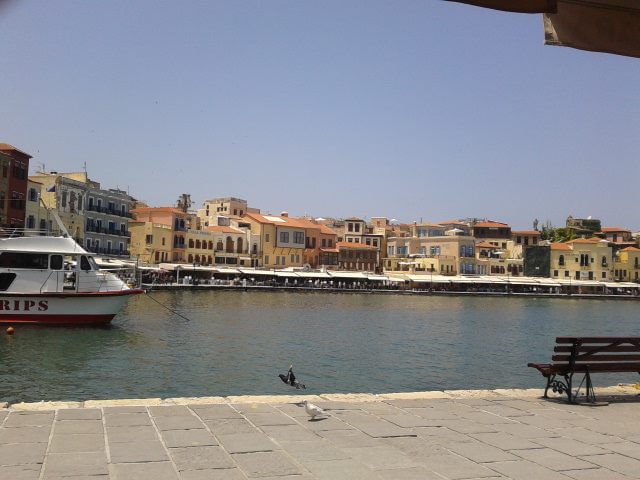
That’s when I stopped doing two jobs (online teaching in the morning and freelance exam preparation in the afternoons). I have more free time to do my favourite things like going for coffee with my friends at Chania’s old port.

Pic credits Eri Mihelaki

Pic credits Eri Mihelaki. Location: Chania, Crete, Greece.

My favourite ELT-related book (borderline ELT)

I started reading Presentation Zen by Garr Reynolds. First of all, I like the design. It is like a coffee table book. It has beautiful pictures and it is like reading a story. It is not boring and it is very easy to understand. I love it and if you give presentations, I strongly recommend reading it.

ZEn

My favourite (most used) website

I am an online teacher, so I use a lot of websites with my learners. Often, when I go through the material we are using, they still want extra grammar or vocabulary practice. That’s where Grammar bank comes in. I send the link to my learners and together we do grammar tasks. The tasks are short and the answers show up after you fill in the gaps.

My favourite twitter stuff

#Eltchat for one, of course!!! I love taking part in twitter chats cause I learn new things and I meet/connect with teachers from around the world. Asking questions on Twitter is great as well. The other day I asked if Adobe connect has stickers, and teachers from all over the world e.g. @DavidHarbinson  @chucksandy and @Ven_VVE  replied straight away (aren’t they great?)!!! Also, everyone is so nice on Twitter. People share and retweet loads of stuff on Twitter.

My favourite “new” bloggers

I just started following their blogs. They have been blogging for a while.

Mike’s Teaching Notes

ELT-Cation

My favourite blog posts

Of course, I blog and read blog posts a a lot. I cannot mention everything I have read this month, but here are a few that I really enjoyed.

TekhnologicVideo Diagrams– Help your students visualize your instructions: OMG. Just look at the videos!!!

Sandy MillinHome: Lovely post. Full of nice pictures. I am going to write one as well   :).

Teaching EAP-What is required to teach EAP?: Very interesting post. If you teach EAP, go for it.

iTDI Blog- Theodora’s interview with her teenage son. A beautiful post. You must read it!!

Hana Ticha’s new WordPress site , and I also really like how Mike Griffin welcomes people to WordPress (he welcomed me to WordPress two months ago as well)!!

My favourite blog posts (as in mine, cause of course I gotta toot me own horn)

#Youngerteacherself posts. Waiting for the 30th post as well. Come on….. you know you want to write one   😀 (also sth else exciting happened regarding these posts, but can’t say anything yet cause don’t wanna jinx it)

I know who I am, but who are you??  Many people commented and said , ” Hello” . That was soooooooooooooo nice!!!

My post

May was the month I wrote my 100th post. I started on Blogger 2 years ago.  I moved “homes” two months ago. It’s also the month I broke my blogging record (13 posts!! To be fair, there were 2 guest posts as well)

The non-ELT  bits and bobs

Book this month

George Orwell’s 1984. My favourite quote from the book.

“It’s a beautiful thing, the destruction of words. Of course the great wastage is in the verbs and adjectives, but there are hundreds of nouns that can be got rid of as well. It isn’t only the synonyms; there are also the antonyms. After all, what justification is there for a word which is simply the opposite of some other word? A word contains its opposite in itself. Take “good”, for instance. If you have a word like “good”, what need is there for a word like “bad”? “Ungood” will do just as well-better, because it’s an exact opposite which the other is not.Or again, if you want a stronger version of “good”, what sense is there in having a whole string of vague useless words like “excellent” and “splendid” and all the rest of them? “Plusgood” covers the meaning, or “doublegood” if you want something stronger stills……….You don’t grasp the beauty of the destruction of words.”        Syme talking to Winston (George Orwell in his book 1984).

I like this bit but not because I like the destruction of words. Nooooo. This extract got me thinking about words and their beauty.

Purchase (s)

This odd Body Shop product that probably does nothing, but it’s nice to spritz all over your face. It’s also supposed to set your makeup (hmmm). Seriously, after 6 hours of online teaching, spraying your face with this nice fancy water is cool. Also, a silver/gold necklace from M&S. Best buy eva, cause who cares what colour it is? It’s two in one. It goes with everything!!!

Girlie stuff

Forgot to mention the ticket I got to London. Chania (Crete, Greece)-London 100 euros!!! Wohooo and it’s with a normal airline, not a low cost one!!!!

Song

I listen to this and ride my bike while reading Marie Claire. It’s a stationary bike (Of course! Otherwise I’d be dead by now).

Favourite organization

Of course Colour blind Awareness org. If you are colourblind like me, visit the website. Show your support. Use the hash tag #1ineveryclassroom (1 colour blind student in every class. In my class there are 2 people!1 out of 12 males and 1/200 females are colour blind). I have also added their page on my side bar.

colourblind

My feat-my 1st painting

This is what I made, despite being colour blind. I am so proud. Of course, I know I am no painter but jeeeeeeze, it’s so cool to be able to do something many people tell you that you won’t be able to do.

2015-05-19 13.16.41

Leisure activity

Watching YouTubers of course. Am I just about teaching, teaching, teaching? Course not!! My favourite YouTuber’s monthly favourites.

Photo I took this month

daisy

I really enjoyed writing this post. I hope you enjoyed reading it cause man did it take time writing!!! Let me know in the comments below what your favourites are   😀

Till next time…….. 

You don’t grasp the beauty of the destruction of words

“It’s a beautiful thing, the destruction of words. Of course the great wastage is in the verbs and adjectives, but there are hundreds of nouns that can be got rid of as well. It isn’t only the synonyms; there are also the antonyms. After all, what justification is there for a word which is simply the opposite of some other word? A word contains its opposite in itself. Take “good”, for instance. If you have a word like “good”, what need is there for a word like “bad”? “Ungood” will do just as well-better, because it’s an exact opposite which the other is not.Or again, if you want a stronger version of “good”, what sense is there in having a whole string of vague useless words like “excellent” and “splendid” and all the rest of them? “Plusgood” covers the meaning, or “doublegood” if you want something stronger stills……….You don’t grasp the beauty of the destruction of words.”        Syme talking to Winston (George Orwell in his book 1984).

This got me thinking about words and how they give colour to our life. Imagine not having any words? Imagine if we only had the words “good” and “ungood”:!! What if everything we described had to be confined in those two words. I love words, so much that I am a very wordy person, and while I think that my ‘word bank’ is kind of broke, there are a few English words I really appreciate, and that’s what this ‘ramble’ is about. So, here goes. the words I like.

Mesmerise: It makes me think of passion and love and all those nice feelings. It has a nice sound to it as well. Just love it.

Mouthwatering: Just makes me think of food and chocolate and Pavlov’s dog.

Quintessence: I don’t know why, but this word just makes me think of things that are important. Unique, significant. It gives meaning to meaning.

Mushroomed: OK, so this word makes me think of pizza, but it is also a nice word. Things popping up everywhere. Hmm, nah, maybe I like it cause I like mushrooms. Anyhoo, it’s one of my favourite words.

Cathartic: Greek word comes from catharsis. Just beautiful, as is the feeling.

Serendipity: I like the meaning. Something beneficial that happens by chance, by luck.

Word I wish existed?

Badest of course (one -d). I think the word worst does not do bad justice. I have said this in an older post. You have something bad, you add -est and it gives a whole new dimension to how bad something is.

So, yeah, that’s about it. I have no idea why I am writing this post (then again, I have no idea why I write many of the things I share on my blog), but I think about it.

Words make our lives………….. (you can add whatever you want here).

2015-05-10 15.17.41

After writing this post and as I was going through my Reader, I saw that Helen has written a post about her favourite German words (she beat me to it   :D). You can read her post here.

Till next time….

Make and Do collocations Lesson Plan

Today I am sharing a lesson plan that presents and practices make/do collocations. This lesson is for elementary level students (teens/adults but not for very young learners). What is the lesson about? It is about Jack and Maria’s love story. In particular, what they do before the date, what they say during the date and notes about household chores once they are living together : ).

In this post you will find  a brief lesson plan for a 45 minute lesson (the role play and note writing can last longer) along with a downloadable detailed lesson plan, handouts and a PPT.

Skills practiced: speaking, writing (mostly).

I hope you like this lesson. I used it with adult learners and they had loads of fun.

Teaching idea: Add a theatrical vibe to the session: Bring in some props like champagne glasses, flowers and have a table with two seats in the middle of the class.

Picture found here

Picture found http://www.buzzerg.com. Link found here

 Brief lesson plan

Lead in: T. shows picture of a couple and sts fill in a table about how men and women prepare before a date (4 mins).

Task 1: Ss read two diary entries (Maria and Jack’s) and find the collocations in the texts (4 mins).

Task 2: Reading comprehension task based on diary entries (6 mins).

Task 3: Ss tick a collocation grid (4 mins).

Task 4: Ss match the collocations in task 3 to phrases in task 4 (4 mins).

Task 5: Brief speaking task about what ppl talk about during dates, followed by a presentation of new collocations which is then followed by a role play. Ss act as if they are Maria and Jack on a date. They use as many collocations as they can (16 mins).

Task 6: Ss write a note related to household chores as Maria and Jack now live together. Ss use the collocations they have learnt today (6 mins).

Material

Lesson Plan can be found below:

NOTE

The handouts can be found below:

Make – do handout

You can find the PPT here:

Please let me know how this goes.

Till next time…..