
The colour blind teacher
Because I started painting lessons, I have written a few blog posts about what it’s like to paint when being partially colour blind. Sandy Millin wrote a post about teaching from an eye height of 1 m. and also asked me if/how not being able to tell between colours affects my teaching, so people, welcome to my classroom. The classroom where colours are different.
Let me start by saying that I do see colours and shades, I just mix them up. Where you see blue, I may think it’s red or green. But how does this affect the way I teach? How important are colours for the non colour seeing teacher?
Red and yellow, pink and blue…..
For starters, I can’t teach the names of colours if the colour is not written under the colour. This means that my flash cards have a blob of a colour on them, and under the blob, it says what colour this is. As far as singing the tune and pointing to the colours, well, my students point to the colours, I just sing the song.
Colourful handouts
I do not organize my handouts based on colours. Nope. My handouts may be random colours, I just don’t say, “Now let’s go to the pink handout.” Instead, I have a title on each handout. Task 1, Task 2 etc.
Pens
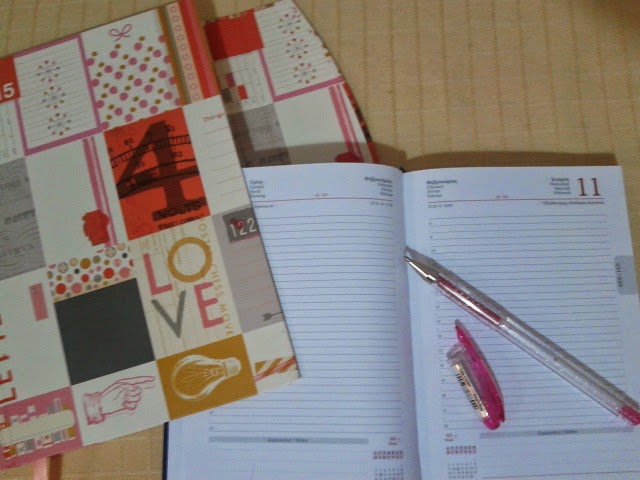
I use liquid paper/permanent markers to recognise the colour of my pens. So, my pens have liquid paper/or a permanent marker and I write the colour of the pen on the pen. I don’t want to use red pen when I am doing error correction, so on my red pens you see the word ‘red’ somewhere (very often I actually choose pens that have the colour written on the cap).
Colour coding
Yeah, great fun way to give feedback but… I don’t use it cause I am scared I might mess up, and my fun error correction task will go down the drain. So, colour codes for error correction? Nope , nope.
Stickers
Hmm this one is probably the hardest colour-related task. I have no idea what the colours of my smiley faces are, so sometimes my boys start laughing and say, “Miss!! This is pink!!” They know I can’t see the colour, so they don’t get upset or anything. We have an understanding when it comes to stickers.
Course books
If colours play an integral part to the way the material is organized, I avoid the course book. If there are tasks that require the use of colours, I switch to different shapes or symbols. So instead of using red for verbs, I circle the verbs. Instead of green for adjectives, I underline the adjectives and so on.
Texts
You never think of this cause you can see colours, but people who are partially colour blind have difficulty reading texts that contrast with the background colour. What do I mean? If the text is written in black and the background colour is red, then I cannot read it. The same happens with green on blue, I see nada. There is not much I can do here cause well, material writers just assume everyone can see colours and that all texts are easy to read. When I make task sheets though, I stick to darker colours on a lighter or white background and everything is fine.
On a more personal note
Not being able to see colours the ‘right’ way affects my everyday life more than my teaching. I bought bananas today but I am not sure if they are green or yellow. When I buy clothes, I write the colour of the clothes on the tag so I know what matches with what (I have done research on which colours go with which). When I am in the bank, I cannot read the sign that shows the customer number cause it’s red on black. BUT…..
Not being able to see green or orange isn’t a problem for me. I don’t mind. Life does go on even when you mix up your colours. I ask people to help me, and they do. I think that because I am a teacher, I have learnt to be more flexible and resourceful. I try to find solutions to whatever makes my teaching hard for me. My colleagues help me, my students help me, I help myself. In this case, the teacher makes it hard for the teacher to teach, and the teacher, me, has to find other ways to teach.

Not being able to see colours is not a disability, it’s what enables me to find other ways to do the same things as you do.
A few days later, I received a tweet from the colourblind awareness. org. One in every 12 men and 1 in every 200 women are colour blind. There is one student in every classroom. #1ineveryclassroom
They also have amazing videos you may want to show your students.
Till next time…..







 My Elt Rambles